The Polish government has now made a formal request to Germany to authorize its transfer of a dozen of its Leopard battle tanks to Ukraine. Warsaw said it now expects to receive a fast response from Berlin now that it has made a formal request.
On Tuesday, Poland made the formal request for Germany to authorize its transfer of 14 Leopard battle tanks to Ukraine. Warsaw has previously criticized Berlin for slow-walking its response and said it now respects a faster response now that it has made a formal request for the transfer.
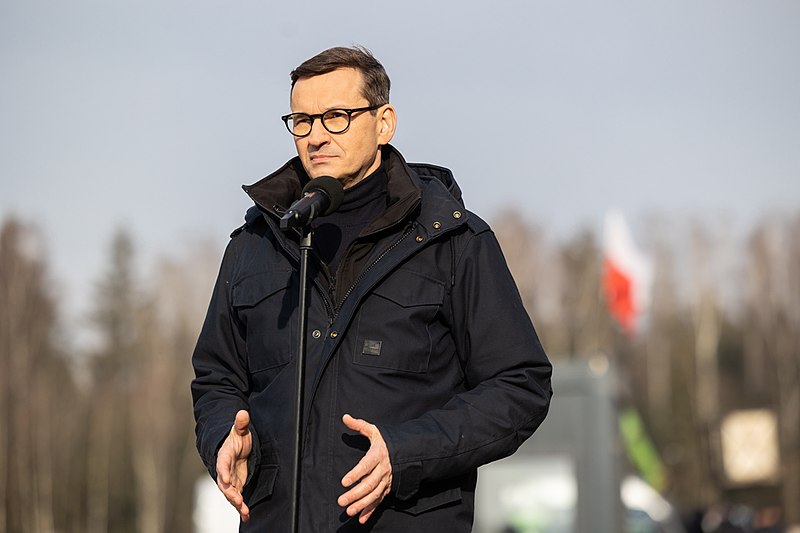
“I hope that this answer from Germany will come quickly because the Germans are delaying, dodging, acting in a way that is difficult to understand,” said Polish Prime Minister Mateusz Morawiecki during a news conference. “We can see that they do not want to help Ukraine defend itself in a wider way.”
Warsaw also said it expects the European Union to shoulder the funding for the tanks, saying that it would be a test of goodwill for Brussels. A German defense source familiar with the matter told Reuters that Berlin has received Poland’s request for authorization to transfer 14 of its Leopard 2 A4 tanks to Ukraine.
A spokesperson for the German government said they intend to handle the requests with “the urgency they deserve.”
Germany’s new defense minister Boris Pistorius said the government would act quickly if there was a consensus on the tanks during NATO Secretary-General Jens Stoltenberg’s visit to Berlin. Pistorius said Berlin was not standing in the way of other countries training Ukrainian troops to use the Leopard tanks as talks over the vehicles continued. However, Pistorius criticized stakeholders for enabling the impression that “there’s disunity or that Germany is isolated.”
Meanwhile, the British defense ministry on Wednesday said Russian forces were reluctant to use the first set of T-14 Armata battle tanks Moscow has worked towards producing in recent months. The reluctance was due to the fact that the tanks were in “poor condition,” according to the ministry.
The ministry noted that it remains to be seen what prompted the response, as Russian officials in the past three years have publicly commented on the flaws of the tanks, such as its engine and thermal imaging systems. The ministry cited Russian defense minister Sergei Shoigu’s comments about the tanks in 2021 that the first batch of the T-14 tanks for 2022 was an “experimental-industrial” batch only.