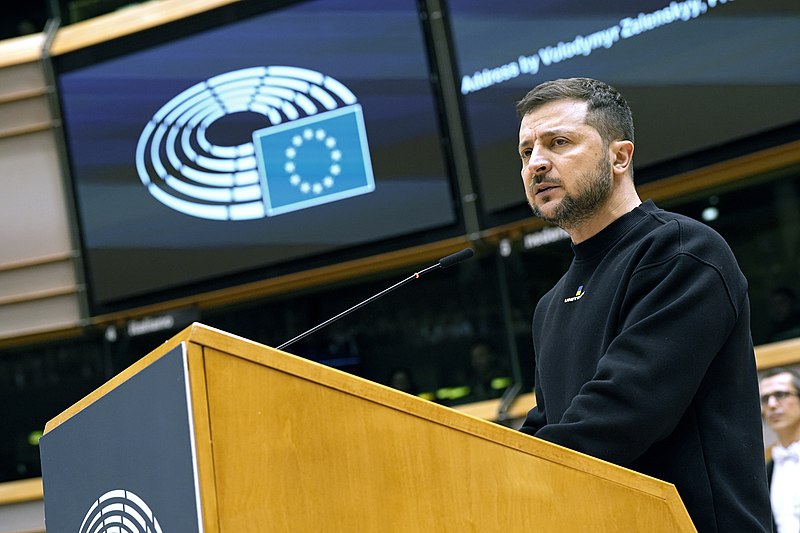
The Ukrainian ambassador to Lithuania said Ukrainian President Volodymyr Zelenskyy plans to attend the upcoming July NATO Summit in Vilnius in person. This would mark Zelenskyy’s third overseas trip since Russia invaded in February last year.
Ukraine’s ambassador to Lithuania, Petro Beshta, told local news outlet BNS that Zelenskyy will be attending the July NATO Summit in Vilnius in person. Beshta added that Kyiv hopes the attendees at the summit will agree “very clearly that as soon as the war is over, Ukraine becomes a member of NATO.”
Zelenskyy has only made two overseas trips since Russia invaded Ukraine in February last year. In December, Zelenskyy travelled to the United States and in February to London, Paris, and Brussels. The NATO summit in July will be attended by most of the leaders of the alliance, according to the Lithuanian presidential office.
Meanwhile, the United Kingdom marked the first year anniversary of the war by issuing more sanctions against Russia. The latest sanctions include export bans on every item Moscow has used on the ground in Ukraine and import bans on iron and steel goods. The UK has also frozen assets and targeted several Russian officials and firms so far in an effort to pressure Russia economically and curb its ability to continue waging war.
London issued a statement announcing the latest sanctions, targeting an additional 92 individuals and entities, including allies of Russian leader Vladimir Putin such as Nordstream 2 boss Matthias Warnig.
Ahead of G7 leaders meeting with Zelenskyy, the UK said the internationally coordinated sanctions and trade measures would target aircraft parts, radio equipment, and electronic elements.
“Today we are sanctioning the elites who run Putin’s key industries and committing to prohibit the export to Russia of every item Russia has been found using on the battlefield,” said foreign secretary James Cleverly in a statement.
Other executives that are targeted by the latest sanctions include those at the Russian state-owned nuclear power facility Rosatom and those who work at defense groups and Russian banks. The UK will also ban imports of 140 goods, including iron and steel products that are processed in third-world countries.