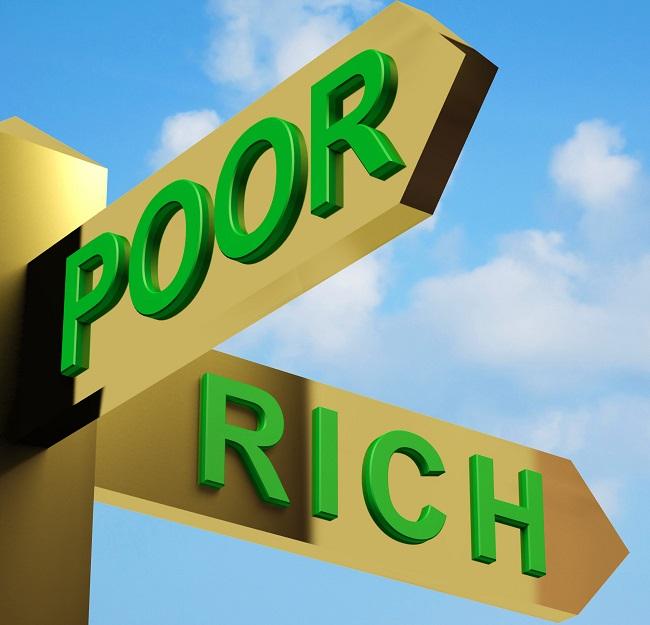
The income disparity between the top 20 percent and bottom 20 percent of households widened with many of the country's low-paying jobs being slashed due to the COVID-19 pandemic.
The average monthly income of households belonging to the bottom 20 percent was 1.49 million won, which remained flat year-on-year, according to Statistics Korea (KOSTAT).
In contrast, those from the top 20 percent of households enjoyed a 6.3 percent hike to 11.15 million won in monthly income during the period.
South Korea's average household had a monthly income of 5.35 million in the first quarter, which is 3.7 percent more from a year earlier.
KOSTAT attributed the rise in inequality to the shrinking wages of low-income households, and a cut down in temporary positions.
The state-run statistics agency added that the number of workers at big companies has increased, and wealthy families received bigger national pensions.
With the number of temporary jobs continuing to decrease in April, KOSTAT warned that worsening income inequality could subsist in the second quarter.
In response to the statistics, the government pledged to hasten its efforts to stabilize the job market and offer financial support to poorer families.


Asia Manufacturing PMI Rebounds as Exports and Tech Demand Drive Growth into 2026
U.S. Stock Index Futures Steady as Markets Await Fed Policy Clues in Holiday-Thinned Trade
Forex Markets Hold Steady as Traders Await Fed Minutes Amid Thin Year-End Volumes
Wall Street Ends Mixed as Tech and Financial Stocks Weigh on Markets Amid Thin Holiday Trading
U.S. Stock Futures Slip as Year-End Trading Turns Cautious
U.S. Dollar Slides Toward Biggest Annual Loss Since 2017 as 2026 Risks Loom
Citi Forecasts a Volatile but Ongoing Bull Market for S&P 500 in 2026
U.S. Dollar Starts 2026 Weak as Yen, Euro and Sterling Hold Firm Amid Rate Cut Expectations
Asian Markets End Year on AI Optimism as Precious Metals and Currencies Shine
Asian Currencies Trade Flat as Dollar Weakens in Thin New Year Trading
South Korea Factory Activity Returns to Growth in December on Export Rebound
South Korea Inflation Rises to 2.3% in December, Matching Market Expectations
South Korea Factory Output Misses Forecasts in November Amid Ongoing Economic Uncertainty
Oil Prices Stabilize at Start of 2026 as OPEC+ Policy and Geopolitical Risks Shape Market Outlook
USDA $12 Billion Farm Aid Program Draws Mixed Reactions from Row Crop Farmers
Gold Prices Rebound in Europe as Geopolitical Tensions and Fed Outlook Support Bullion 


