


 Fed’s Hammack Says Bond Yield Surge Is Not Driven by Inflation Fears
  Gold Prices Hit One-Week High as Oil Falls, Fed Rate Outlook Weighed
  Gold Prices Rise Above $4,200 as Russia-Ukraine Energy Truce Eases Oil Concerns
  Australia Consumer Confidence Plunges as RBA Rate Hike Hits Households
  Fed Unveils Stablecoin Rules Under GENIUS Act
  Deutsche Bank CEO Urges Faster German Economic Reforms
  US Dollar Rises for Fourth Week as Fed Rate Hike Bets Grow
  Oil Prices Surge Above $106 After Deadly Saudi Airport Attack
  Asian Currencies Steady as Dollar Nears 18-Month High Ahead of US CPI
  European Auto Stocks Rise as EU-China Trade Deal Targets Hybrid Imports
  US Stock Futures Rise as Oil Prices Fall Ahead of Q3 Earnings
  Trump Defends Russian Diesel Deal Amid US Sanctions Backlash
  US Dollar Near 18-Month High Ahead of Inflation Data
  Yen in Focus as BOJ, Fed Rate Hikes Reshape Currency Markets


 Add as a preferred source on Google
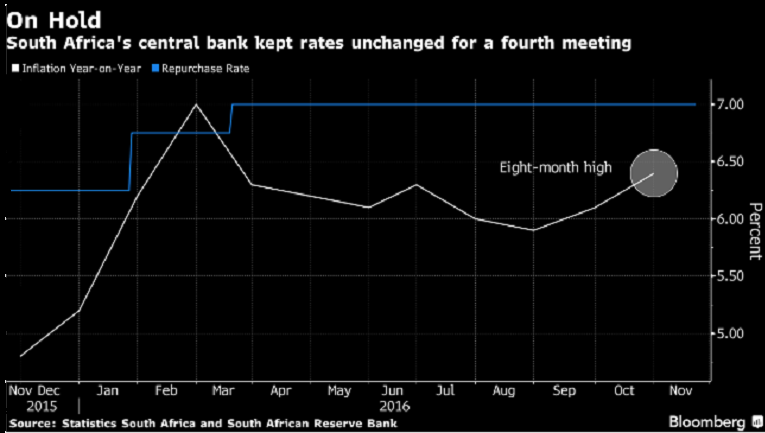
The South African Reserve Bank (SARB) remained on hold at the monetary policy meeting held Thursday, underlining weak domestic currency amid heightened risks from global uncertainty. Also, inflation remained below the central bank’s target range, compelling it to further not raise interest rates.
The six-member monetary policy committee (MPC), chaired by Governor Lesetja Kganyago, unanimously decided to take the neutral move; also, it did not discuss a rate cut move, nor did any of the members urge for a hike in the meeting. The MPC has remained on hold since the since March after raising it by 200 basis points since 2014 in a bid to limit price growth to between 3 percent and 6 percent.
Despite inflation picking up to an 8-month high to 6.4 percent in October, it is estimated to slow with the central bank’s target band of 3-6 percent by the second quarter of 2017. The MPC forecasts inflation will peak at an average of 6.6 percent this quarter and slow to 5.8 percent next year and 5.5 percent in 2018.
Moreover, the rand dropped to its lowest level, following news of President-elect Donald Trump’s victory in the 2016 US presidential election, on risks of a rise in government expenditure that could instigate a series of US interest rate hikes, posing serious downside risks to the import-dependent South African economy.
However, the SARB kept its economic growth forecast for the year unchanged at 0.4 percent. Output will expand at 1.2 percent in 2017 and 1.6 percent the year after, according to the MPC. Also, the rand will follow a volatile nature, in relation to the Federal Reserve decision in December. Although markets have fully priced in for a rate hike next month, uncertainties still prevail for South Africa.
Meanwhile, Moody’s has rated South Africa’s foreign-currency debt at two levels above junk, with a negative outlook, while S&P Global Ratings is yet to publish it outlook on December 2, but possesses a similar view with the lowest investment-grade level.







