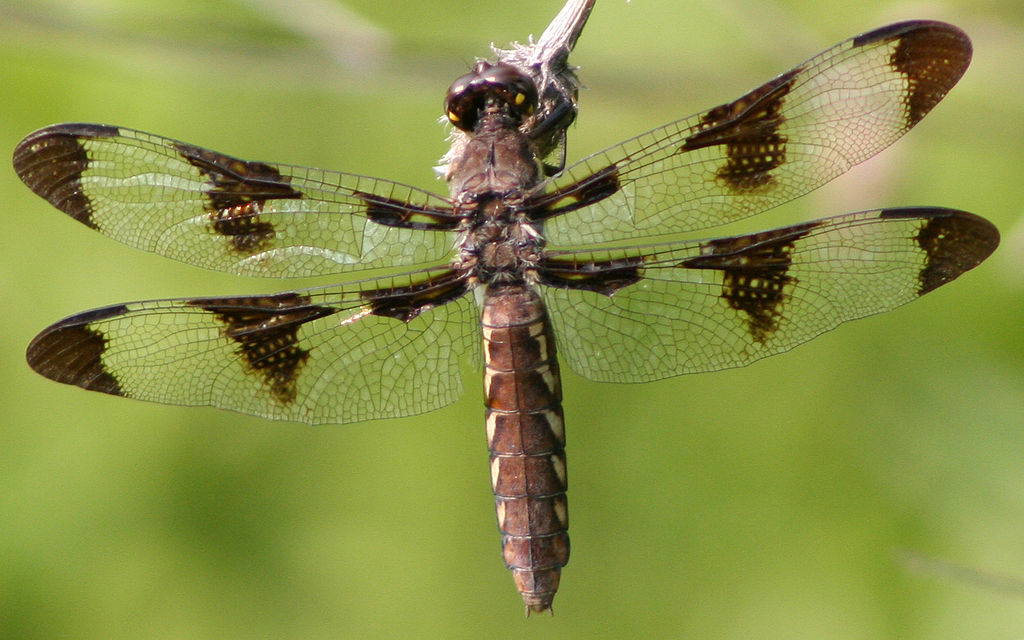
The British TV show “Black Mirror” had an episode wherein a tech company was utilizing miniature drones that mimicked insects to kill people. Real-life scientists are now working on the first part by genetically engineering dragonflies in order to turn them into tiny flying machines. Whether or not the targeted assassination part will follow is yet to be determined.
Draper is a company involved in creating biomedical solutions and it recently announced that it was going to create a drone that was part machine and part living dragonfly. The project is titled DragonflEye and before anyone raises a fuss about scientists creating a monstrosity, it’s not actually about creating a bastard version of a machine dragonfly from scratch.
Instead, the project will involve strapping a tiny electronic backpack on the dragonfly, which will basically tell it what to do by sending signals to its nerve cord. It’s basically like prodding the flying insect to follow instructions instead of robbing it of autonomy completely.
Jesse J. Wheeler is the lead of the project and according to him, the prototype has already been developed, but it still requires testing. The testing will involve putting the backpack on dragonflies and having them whiz around a controlled space surrounded by cameras to see just how viable the concept is Futurism reports.
Speaking to IEEE Spectrum, Wheeler noted how past experiments in controlling insects used heavier subjects such as beetles. However, the biggest difference between previous attempts and their own method is the use of the navigation system.
More than anything else, it’s the matter of guidance rather than control that might just allow the project to take off. By applying optogenetics, which is basically genetically modifying the response of organisms to light, it removes a lot of the restrictions that have been literally weighing down previous experiments. It basically makes the burden lighter on the insect while still achieving the desired results.