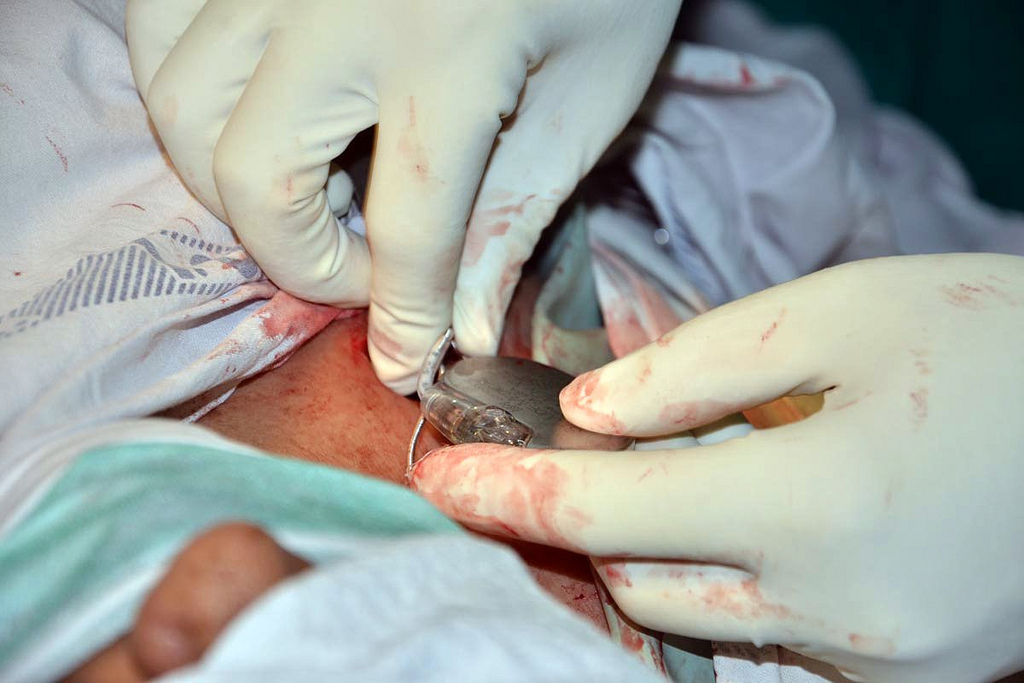
Pacemakers have saved a lot of lives over the years by helping to regulate the heartbeats of those with arrhythmia. The problem, however, is that those pacemakers run on batteries that have a tendency to run out of juice after a while. As a result, patients have to undergo an invasive procedure every once in a while in order to stay alive. By utilizing the technology that allows wristwatches to function, this problem may have finally been addressed.
The researchers responsible for the discovery are Andreas Haeberlin and Adrian Zurbuchen from the University of Bern and the University of Michigan, Futurism reports. The method that the pair proposed basically involves initiating a cycle between the pacemaker and the heart, where the heartbeat will give the pacemaker power via kinetic energy and the pacemaker will give the heart assistance in order to maintain a consistent rhythm.
By setting the system up like this, it creates a loop where the pacemaker is continuously powered and the heartbeat is continuously maintained to have a normal pace. Basically, the researchers just made the heart the battery for the thing that’s keeping it working. A symbiotic relationship, in a sense.
Aside from pacemakers, this discovery could potentially also have an impact on other implanted devices, TechXplore reports. These could include defibrillators or electrical stimulators that keep important organs from ceasing to function. This is a solution that addresses one of the biggest problems involved in implanted devices.
"Repeated battery replacement procedures can be avoided by extending the implants lifespan, which is the goal of energy harvesting concepts,” the Abstract of the paper reads. This reduces the risk of complications for the patient and may even reduce device size. The continuous and powerful contractions of a human heart ideally qualify as a battery substitute."