


 Tabletop particle accelerator could transform medicine and materials science
  Neuralink Plans High-Volume Brain Implant Production and Fully Automated Surgery by 2026
  Senate Sets December 8 Vote on Trump’s NASA Nominee Jared Isaacman
  Trump Administration Releases New UFO Files and Apollo Mission Records
  Blue Origin’s New Glenn Achieves Breakthrough Success With First NASA Mission
  China vs. NASA: The New Moon Race and What's at Stake by 2030
  Is space worth the cost? Accounting experts say its value can’t be found in spreadsheets
  Trump Signs Executive Order to Boost AI Research in Childhood Cancer
  Blue Origin New Glenn Explosion Could Delay Launch Operations Until 2028


 Add as a preferred source on Google
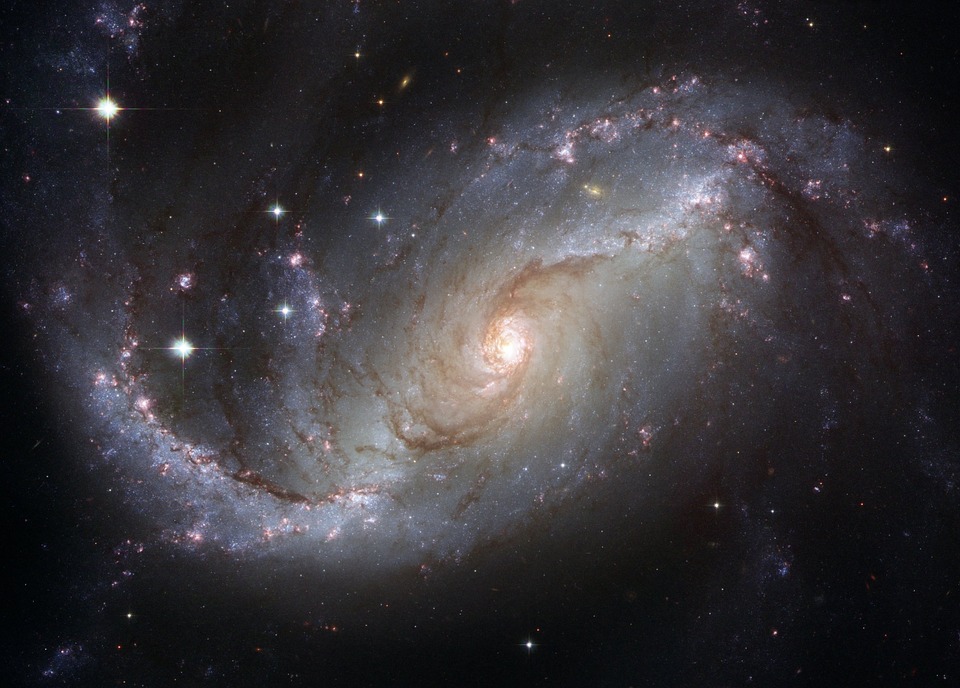
Earth sits within the billions of stars in the Milky Way galaxy and it is the place in the universe that we call home. Scientists recently found a clue that could reveal a little more about the galaxy’s early history, including the moment it began to turn into the massive galaxy known today.
Scientists, with the use of the European Space Agency’s Gaia satellite, were able to pinpoint one particular star, referred to as Nu Indi which is found 94 light-years from Earth. Astronomers found that Nu Indi came from the remains of the Milky Way when it started to consume other neighboring galaxies and star systems. It was 11 billion years ago when the Milky Way collided with another galaxy called the Gaia Enceladus or Gaia Sausage, which happened to be the largest satellite galaxy that was consumed by the Milky Way.
When the two galaxies collided, Nu Indi had just been formed. Upon analysis showing that Nu Indi was not abundant in metal, astronomers concluded that it must not have formed where it was located - the southern constellation of Indus. Scientists used the ESA’s Gaia satellite to monitor Nu Indi’s movements over time, and along with data from NASA’s Transiting Exoplanet Survey Satellite, they were able to depict what Nu Indi may look like, with a size of three times the Sun but with only 85 percent of the giant star’s mass.
According to Dr. Saskia Hekker, who led the team that was able to pinpoint Nu Indi and monitor its movements, “This chronological classification not only helps us to understand how the collision changed our galaxy. It also gives us a sense of how collisions and mergers impacted other galaxies and influenced their evolution.”
Onto more discoveries within the Milky Way, Sci News reports that researchers have found that around 26 percent of exoplanets found in the galaxy have oceans in its surface and all of which likely have volcanic activity occurring.
Dr. Lynnae Quick of NASA’s Goddard Space Flight Center revealed that there are plumes of water ejecting from Enceladus and Europa, the respective moons of Saturn and Jupiter, which suggest the presence of subsurface oceans underneath the icy surfaces. Within these subsurface oceans also suggests the presence of energy, which is essential in forming life. This brought on the possibility of other exoplanets having the same geological activity.







