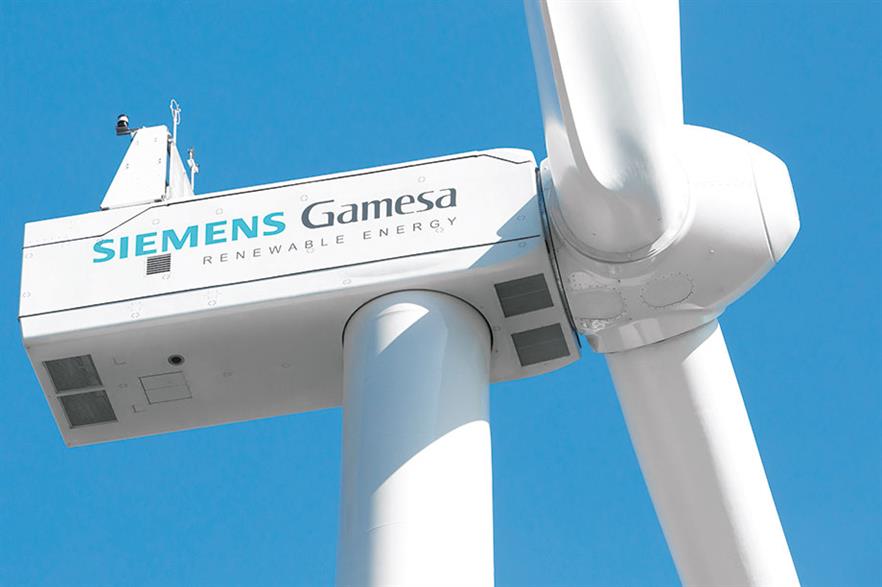
Siemens Gamesa vows to introduce greener towers for its onshore and offshore wind turbines soon by using more sustainable steel, which lowers CO2 footprint by 63 percent compared to those made from conventional steel.
The creation of the new “GreenerTower” will be achieved by making sure that CO2-equivalent emissions during tower production are capped at 0.7 tons per ton of steel, without sacrificing steel properties and quality.
Conventional steelmaking usually emits 1.91 tons of CO2 on average for every ton, which makes the manufacturing of towers responsible for more than one-third of all wind turbine-related CO2 emissions.
German steel producer Salzgitter AG will supply the greener steel, which is created with the increased use of scrap steel, less energy, and higher renewable energy in power consumption.
According to Maximilian Schnippering, Head of Sustainability at Siemens Gamesa, the wind industry needs to reduce its carbon footprint as there would be more than 600 GW of new capacity to be installed worldwide in the next five years.
The GreenerTower will be available as an option for onshore and offshore turbines for projects scheduled for installation from 2024 onward.
German energy group RWE AG has agreed to use 36 such towers at its 1-GW Thor offshore wind off Denmark, having already selected Siemens Gamesa as the preferred turbine supplier for this project.
RWE previously used a batch of Siemens Gamesa’s recyclable blades in an offshore wind farm in German waters.