


 Trump Sanctions International Criminal Court, Sparking EU Backlash
  Trump Defends Russian Diesel Deal Amid US Sanctions Backlash
  US Recalls Nicaragua Envoy After Ambassador Rejection
  North Korea Fires Ballistic Missiles as Tensions With South Korea Escalate
  India Voter List Protests Reach Supreme Court as Opposition Demands Election Chief's Resignation
  MI5 Warns of Rising Iran, Russia Threats and AI Bioweapon Risks
  Trump Plans White House Shake-Up of Key AI Safety Agency
  Most Americans Oppose Election Betting on Prediction Markets, Poll Finds
  Kim Jong Un Showcases ICBM Ahead of Possible Trump Meeting
  US Supreme Court Denies Release of Anti-ICE Activist Kyle Wagner
  Mahmoud Abbas Postpones Palestinian Elections to September 2027
  Trump Announces Russia-Ukraine Energy Ceasefire as Zelenskiy Awaits Details
  US Condemns China Sanctions on Taiwan Allies Belize and Paraguay
  Trump Denies Russia and China Are Helping Iran in U.S. Conflict
  Trump Denies China, Russia Are Helping Iran in War
  Trump Warns Houthis Over Attacks, Considers Erdogan Intervention
  Zelenskiy Says Ukraine Received No Warning Before Russian Missile Attack


 Add as a preferred source on Google
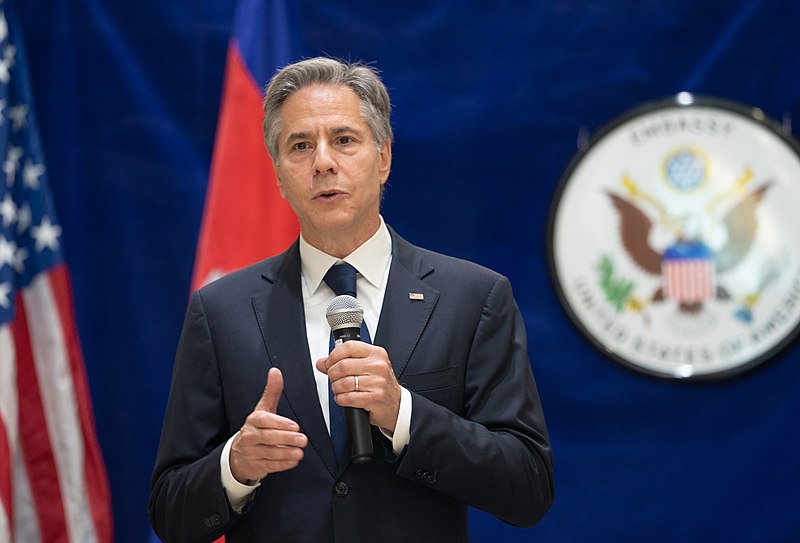
United States Secretary of State Antony Blinken met with his counterparts from the Association of Southeast Asian Nations this week. Blinken said Washington opposes any unilateral change to the status quo concerning Taiwan, and that the US policy on Taiwan remains the same.
Blinken met with the ASEAN foreign ministers in Cambodia aside from attending a security-focused meeting of over 27 countries with the food crisis caused by the war in Ukraine, the situation in the Taiwan Strait, and the unrest in Myanmar. Blinken and the ASEAN bloc pledged to upgrade their relations to a strategic partnership.
“We and countries around the world believe that escalation serves no one and could have unintended consequences that serve no one’s interests, including ASEAN members, and including China,” said Blinken.
Blinken said during the meeting that cross-strait stability is in the interests of the region. The top US diplomat’s comments follow a visit to Taiwan by House Speaker Nancy Pelosi, the highest-ranking US official to visit the island in 25 years, drawing the ire of China, which claims Taiwan as its territory.
China ramped up its military activities near the island on Thursday, firing multiple missiles as it carried out its largest military drills around Taiwan. Chinese foreign minister Wang Yi said Beijing has made the utmost diplomatic effort to avert any crisis, but it will not allow its core interests to be targeted.
The military activities by China have also led to protests from Japan, as five Chinese ballistic missiles landed in its exclusive economic zone, according to Japanese defense minister Nobuo Kishi Thursday.
Wang also canceled a meeting with Japan’s foreign minister Hayashi Yoshimasa following Beijing’s ire toward the G7 statement that urged China to resolve its disputes around Taiwan in a peaceful manner. Wang also refused to meet with Blinken despite being in attendance
The 10-member bloc also warned of possible miscalculation in the Taiwan Strait and a “serious confrontation” between major world powers. The bloc said that tensions could lead to “open conflicts and unpredictable consequences” and called for restraint.
“ASEAN stands ready to play a constructive role in facilitating peaceful dialogue between all parties,” the bloc said in a statement.







