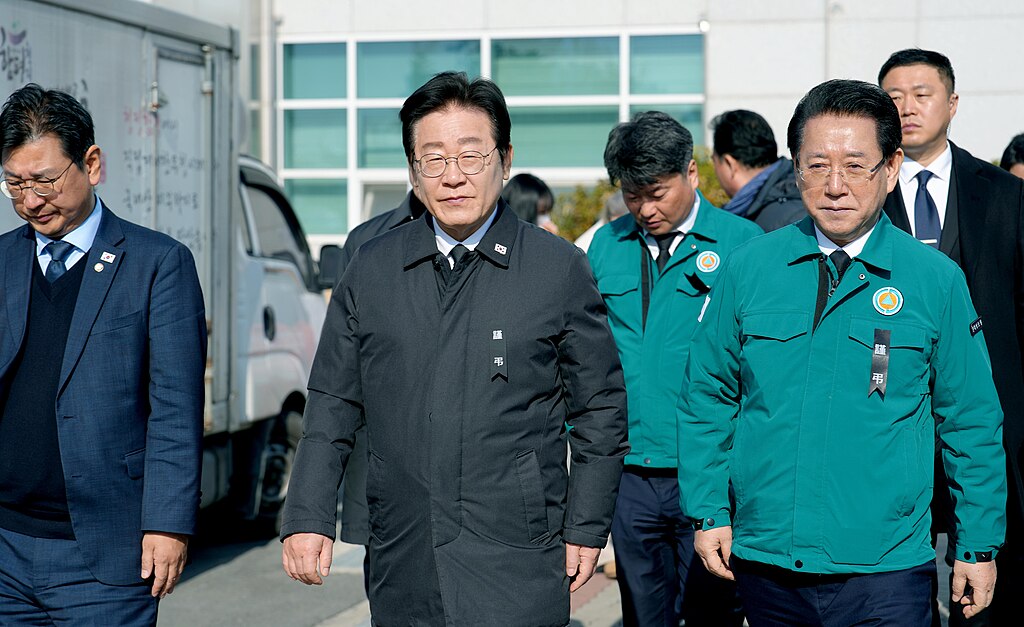
South Korea’s new President Lee Jae-myung is expected to adopt a strategic approach to ongoing trade negotiations with the United States, aiming to buy time while observing how Japan and China handle their respective talks with Washington. Lee, who took office immediately after winning the June 3 snap election, identified trade talks with the U.S. as his top priority, given the country’s export-driven economy and exposure in sectors like semiconductors, automobiles, and shipbuilding.
Facing an expected 0.8% economic growth in 2025—the lowest since 2020—Lee’s administration inherits a fragile economy and a politically divided country following former President Yoon Suk Yeol’s failed martial law attempt. Sources close to the Democratic Party suggest the lack of a typical transition period offers an excuse to delay formal negotiations while assessing the broader trade landscape.
Trump’s administration reportedly pressured trade partners to submit offers by Wednesday, but Seoul may use its leadership change and the July 8 negotiation deadline to delay proceedings. Experts argue South Korea is better positioned than others in the region due to its strategic importance in shipbuilding and tech, and may offer import increases and tariff adjustments on agricultural goods like rice.
Lee’s silence on contentious trade topics during his campaign is now seen as a calculated move. Analysts say a potential extension could be discussed at the upcoming G7 summit in Canada, where South Korea may seek support. Meanwhile, Lee's administration is exploring a dual-track strategy where current officials maintain momentum while new policies are developed.
Observers believe Seoul should proceed cautiously to avoid making premature concessions, especially if U.S. tariff policies shift. As one trade expert noted, “It’s not like we don’t have any leverage.”