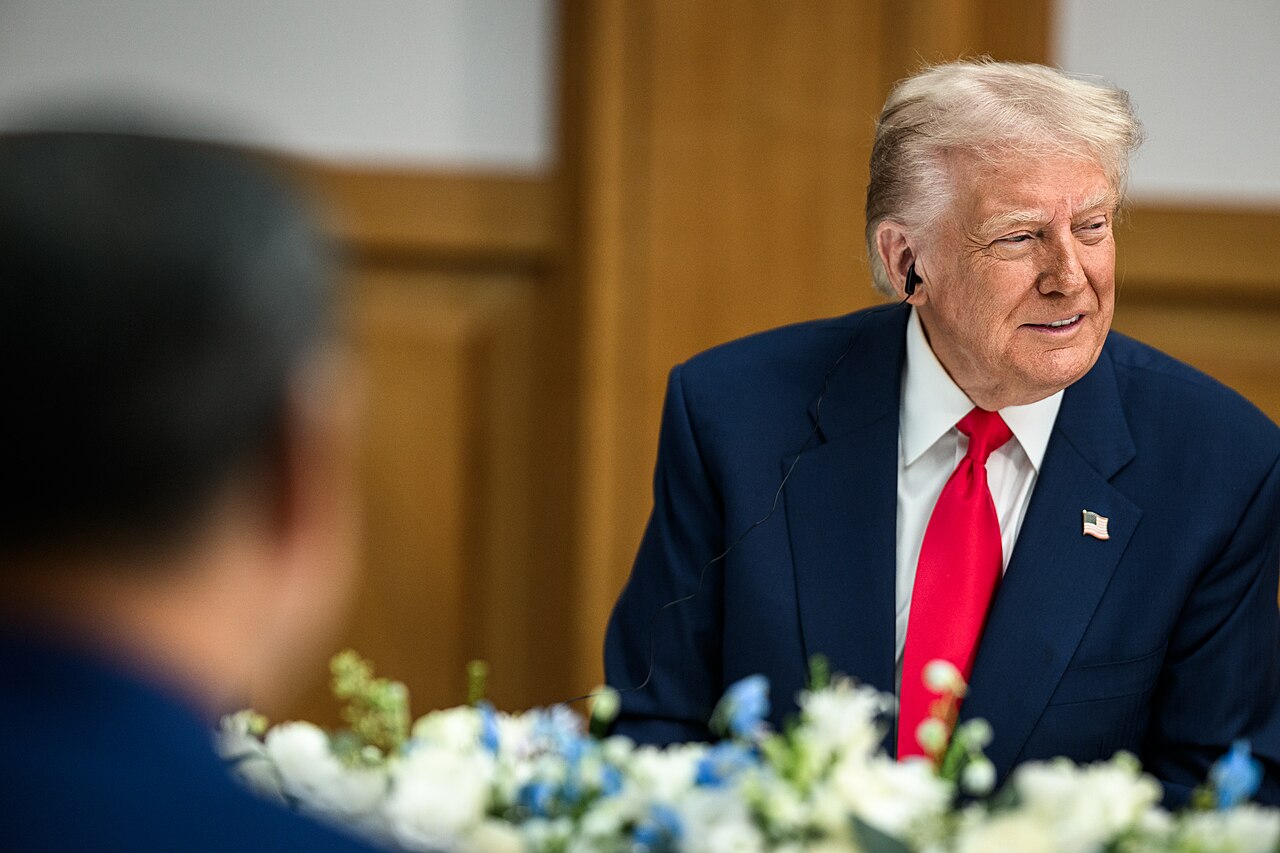
U.S. President Donald Trump on Thursday declassified intelligence documents that he said expose Chinese interference in U.S. elections, renewing his focus on election security ahead of the November midterm elections. The move comes despite a 2021 U.S. intelligence assessment that found no evidence China altered or influenced the outcome of the 2020 presidential election.
During a 25-minute prime-time address, Trump argued that the newly released materials reveal significant weaknesses in the U.S. election system. He also urged congressional Republicans to pass the SAVE America Act, legislation that would require photo identification for voting, proof of U.S. citizenship for voter registration, and tighter restrictions on mail-in voting. The bill has repeatedly passed the Republican-controlled House but remains stalled in the Senate due to Democratic opposition.
Trump claimed the declassified intelligence shows China obtained data on roughly 220 million U.S. voters, including names and addresses, while accusing members of the intelligence community of downplaying Beijing’s activities. However, the previously released 2021 intelligence review concluded that no foreign government attempted or succeeded in altering voter registrations, ballots, vote tabulation systems, or election results. The assessment was conducted under then-Director of National Intelligence John Ratcliffe, who now serves as CIA director.
The report acknowledged that China has collected publicly available information on U.S. voters, political parties, candidates, and public opinion since at least 2008, primarily to better understand and forecast election outcomes. Sources familiar with the matter said the voter data referenced by Trump consisted of non-confidential records that are commonly purchased by political consultants and could not be manipulated to change election results.
Some of the declassified documents also appeared to contradict Trump's claims. One focused on Venezuela’s election system rather than the United States, while another concluded that U.S. vote tabulation systems would be difficult to compromise on a scale capable of affecting election outcomes. A separate CIA assessment stated that although Chinese intelligence monitored U.S. politics, Beijing did not intend to covertly influence the election.
The speech came as Trump faces political pressure over the Iran conflict, high energy prices, and declining approval ratings. Democratic leaders criticized the address, saying it repeated previously debunked election claims without presenting evidence that any votes in 2020 were altered. Despite the controversy, Trump continues to make election integrity a central issue as Republicans seek to protect their narrow congressional majorities in November.