
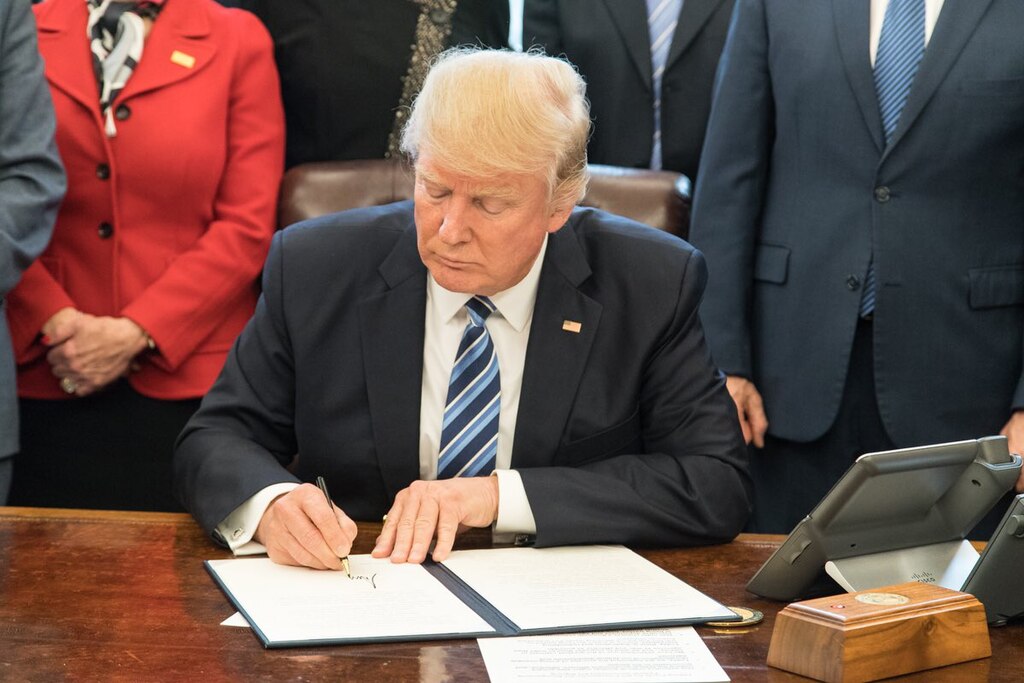
U.S. President Donald Trump has signed executive orders imposing new tariffs on imported medium- and heavy-duty trucks and parts, while expanding credits for U.S. auto and engine production. Starting November 1, a 25% tariff will apply to all imported Class 3 through Class 8 trucks, including large pickup trucks, cargo trucks, dump trucks, and tractor-trailers. Additionally, imported buses will face a 10% tariff. The move, justified on national security grounds, is designed to encourage automakers to shift production to the United States but could deliver a major economic blow to Mexico, the largest exporter of heavy-duty trucks to the U.S.
Under the new policy, automakers such as GM, Ford, Toyota, Honda, Tesla, and Stellantis will benefit from expanded production credits. Companies assembling vehicles or engines in the U.S. will receive a 3.75% credit based on the vehicle’s suggested retail price, available through 2030. The credit, initially proposed by the Commerce Department in June, now extends over five years at a consistent rate, providing significant relief from tariffs on imported auto parts and incentivizing domestic production. Republican Senator Bernie Moreno praised the move, stating it strengthens U.S. competitiveness in manufacturing.
Ford CEO Jim Farley noted that the new tariffs and credits will make U.S. production more affordable and create fairer competition with imports. However, the U.S. Chamber of Commerce criticized the decision, pointing out that the top truck import sources—Mexico, Canada, Japan, Germany, and Finland—are key U.S. allies. Despite opposition, Trump emphasized that the tariffs protect domestic manufacturers from “unfair outside competition.”
The decision follows earlier tariff hikes on steel, aluminum, and automotive components totaling $240 billion annually. GM and Ford have each projected billions in tariff-related costs this year, underscoring the industry’s ongoing challenge amid shifting trade policies.


