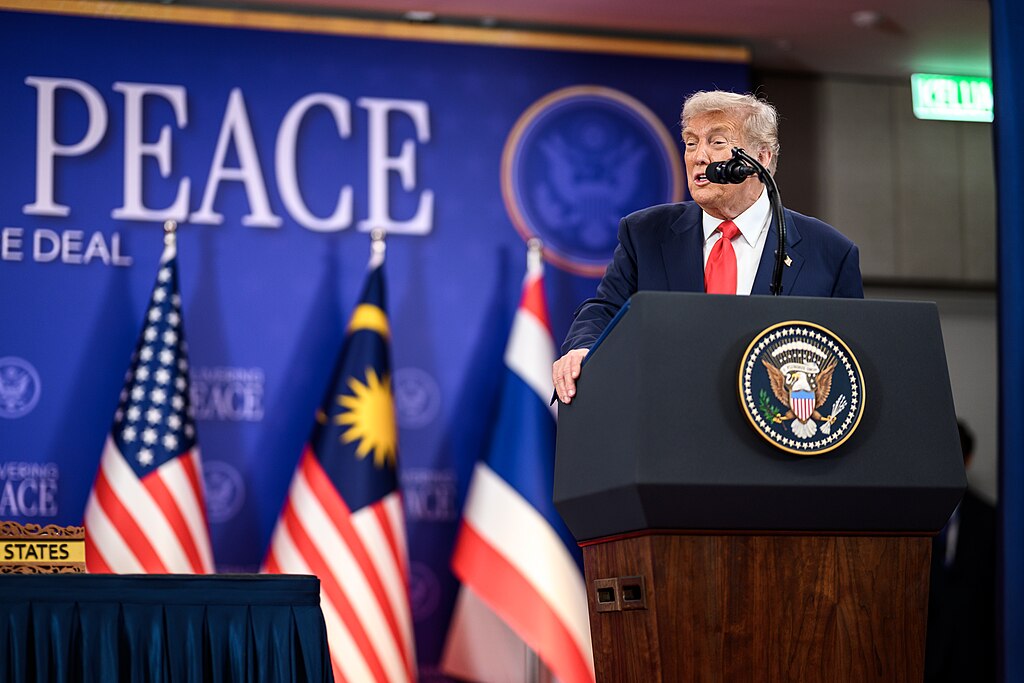
U.S. President Donald Trump announced Wednesday that he will hold a phone call Thursday with leaders from Thailand and Cambodia as Washington attempts to ease escalating tensions between the two Southeast Asian nations. Speaking to reporters, Trump expressed confidence in his ability to help reduce the confrontations, stating, “I think I can get them to stop fighting,” and adding that discussions were already scheduled for the following day.
Trump’s comments come amid growing international concern over military activities and border disputes that have strained relations between Thailand and Cambodia. While details of the dispute were not outlined in Trump’s remarks, the long-standing friction between the two countries has periodically resurfaced, often drawing attention from regional partners and global powers interested in maintaining stability in Southeast Asia. Washington’s involvement signals a renewed diplomatic effort to discourage further escalation and encourage dialogue.
By positioning the United States as a potential mediator, Trump aims to leverage U.S. influence to prevent the situation from deteriorating further. The administration believes that early intervention and direct communication with both governments could help pave the way for a peaceful resolution. Analysts familiar with U.S.–Southeast Asia relations note that American engagement in the region often focuses on promoting stability, strengthening alliances, and preventing conflicts that could disrupt economic and security interests.
Although Trump did not reveal the specific agenda for the call, diplomatic observers expect discussions to center on reducing military friction, encouraging negotiations, and reaffirming Washington’s willingness to support peaceful cooperation. The president’s upcoming conversation with Thailand and Cambodia highlights ongoing concerns over border disputes in Asia and underscores the importance of international mediation when regional tensions rise.
As the world watches for developments, Trump’s confidence in facilitating dialogue reflects the administration’s broader strategy of maintaining influence in key geopolitical areas while supporting efforts toward long-term regional peace.