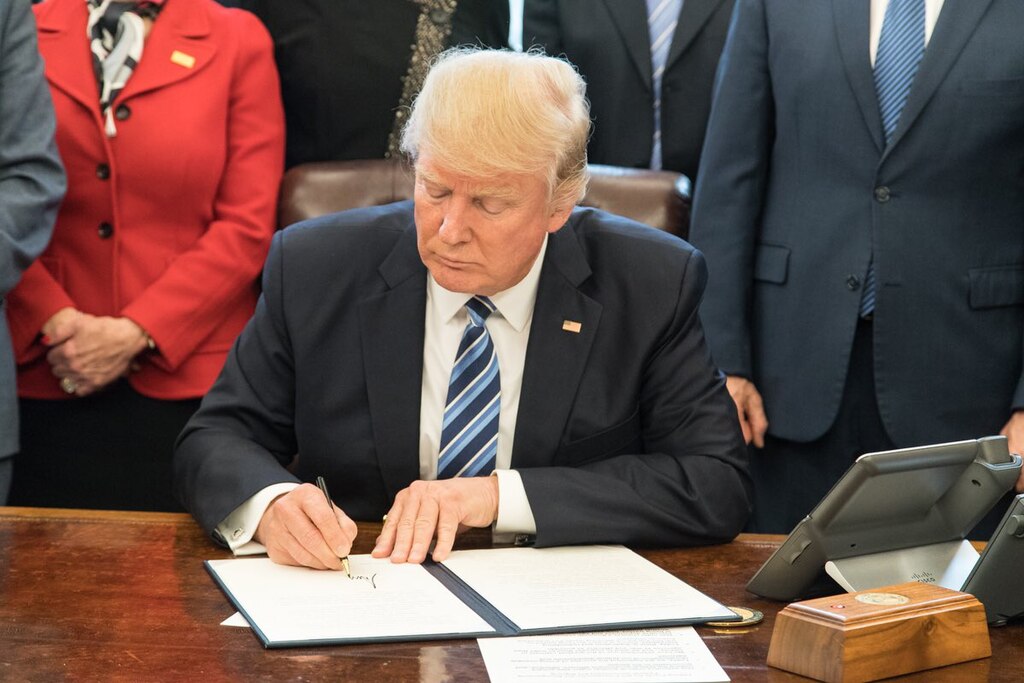
President Donald Trump has signed legislation officially ending the longest government shutdown in U.S. history, which lasted 43 days. The move came just hours after the House of Representatives voted 222-209 to approve a funding package that restores food assistance, pay for hundreds of thousands of federal employees, and reopens key government services, including air-traffic control operations.
The bill, previously passed by the Senate, will allow federal workers to return to their jobs as early as Thursday. However, the full restoration of government operations may take several days. Trump, during the Oval Office signing ceremony, emphasized that such a shutdown should never happen again, stating, “This is no way to run a country.”
The legislation extends government funding through January 30 and keeps the U.S. on track to add approximately $1.8 trillion annually to its $38 trillion national debt. Despite reopening the government, the political standoff between Republicans and Democrats leaves lingering tensions, particularly over the extension of federal health insurance subsidies.
Economists estimate the shutdown reduced U.S. GDP by more than a tenth of a percentage point each week, though much of that loss is expected to recover. The end of the shutdown also means the resumption of key economic data releases that investors and policymakers rely on, though some October reports may never be published.
While Democrats had hoped recent election victories would strengthen their position on healthcare, House Speaker Mike Johnson made no commitment to a vote on extending subsidies. Meanwhile, a Reuters/Ipsos poll showed that Americans were nearly split on assigning blame for the shutdown—50% held Republicans responsible, while 47% blamed Democrats.
The shutdown’s conclusion offers relief to millions of families and federal employees while exposing the deep political divisions that continue to shape Washington.