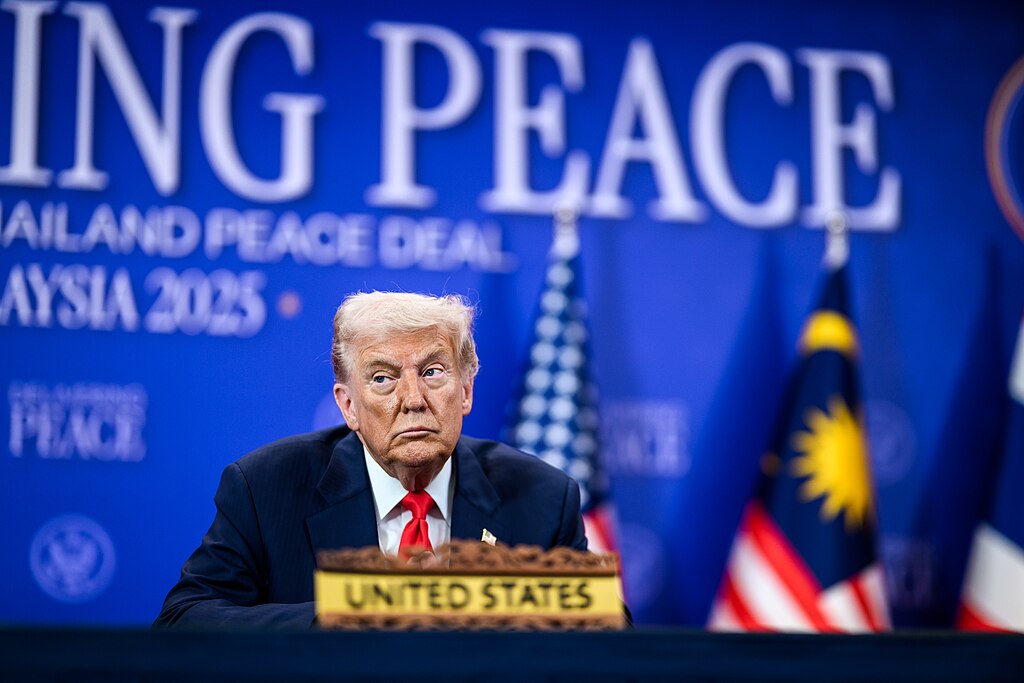
U.S. President Donald Trump has escalated tensions with Iran after warning that the United States is prepared to support Iranian protesters if security forces continue to fire on demonstrators. The comments came as nationwide protests over soaring inflation and economic hardship entered their third day, marking Iran’s most serious internal unrest in years.
In a social media post, Trump said the United States was “locked and loaded and ready to go,” though he did not specify what actions Washington might take. His remarks follow U.S. and Israeli air strikes in June that targeted Iranian nuclear facilities and military leadership, further increasing pressure on Tehran. Trump also warned of fresh strikes if Iran resumes nuclear or ballistic missile activities.
Iranian officials strongly condemned Trump’s statements. Ali Larijani, head of Iran’s National Security Council and a senior adviser to Supreme Leader Ayatollah Ali Khamenei, warned that U.S. interference would destabilize the entire Middle East. Iran’s U.N. Ambassador Amir-Saeid Iravani formally urged the U.N. Security Council to condemn Trump’s remarks, stating that the United States would bear responsibility for any escalation.
The protests, driven by inflation and rising living costs, have spread across Iran, with clashes reported mainly in western provinces. Rights groups and state-affiliated media report at least 10 deaths, including members of the Basij paramilitary force linked to the Revolutionary Guards. Videos verified by Reuters showed burning police stations, gunfire, and chants against authorities, while slogans such as “Death to the dictator” were heard in cities like Zahedan.
Authorities have responded with arrests and warnings. State media reported detentions in Kermanshah and other regions, alleging protesters were manufacturing petrol bombs and homemade weapons. Human rights group Hengaw said at least 133 people have been arrested so far.
Despite the crackdown, Iran’s newly elected President Masoud Pezeshkian has adopted a more conciliatory tone, acknowledging government failures and pledging dialogue with protest leaders. However, rights groups say security forces continue to use lethal force.
The unrest represents the biggest challenge to Iran’s leadership since the 2022 protests over the death of a woman in custody. Combined with ongoing U.S. sanctions and regional instability, the protests underscore the mounting pressure on Tehran as U.S.-Iran relations reach a new flashpoint.