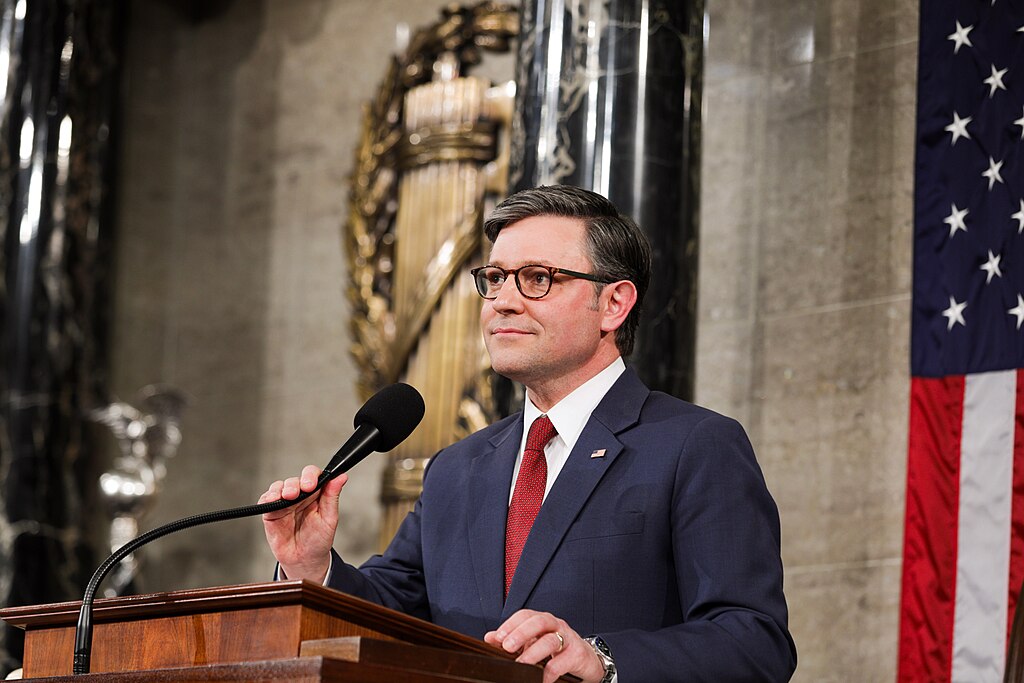
U.S. House Speaker Mike Johnson announced that President Donald Trump’s sweeping tax and spending bill may head to a vote as early as Wednesday night. The announcement follows Johnson’s negotiations with Trump and key Republican holdouts aimed at securing enough support to pass the bill. Revisions to the bill were made to appease GOP concerns, including earlier Medicaid work requirements, reduced incentives for Medicaid expansion, and an increased cap on state and local tax deductions.
The legislation seeks to extend Trump’s 2017 tax cuts, introduce new tax breaks for tipped workers and auto loans, and slash green-energy subsidies. It also increases funding for military and immigration enforcement. However, the Congressional Budget Office projects it would add $3.8 trillion to the national debt, which currently stands at $36.2 trillion. Moody’s recently downgraded the U.S. credit rating, citing rising debt, a move that rattled markets and triggered criticism from Republican lawmakers who questioned the timing and credibility of the downgrade.
Despite the bill’s scope, Republican leaders face resistance from both fiscal conservatives and moderates from high-tax states, who want changes to the $30,000 cap on SALT deductions. Democrats argue the bill favors the wealthy and undermines social programs like Medicaid. One provision would rename "MAGA accounts" for children’s savings to "Trump accounts."
The bill would also raise the U.S. debt ceiling by $4 trillion, a move required to avoid a potential default this summer. If passed in the House, it will proceed to the Senate, where significant amendments are expected. Johnson remains optimistic, stating, “I believe we are going to land this airplane,” as the GOP scrambles to present a united front for one of Trump’s biggest legislative pushes.