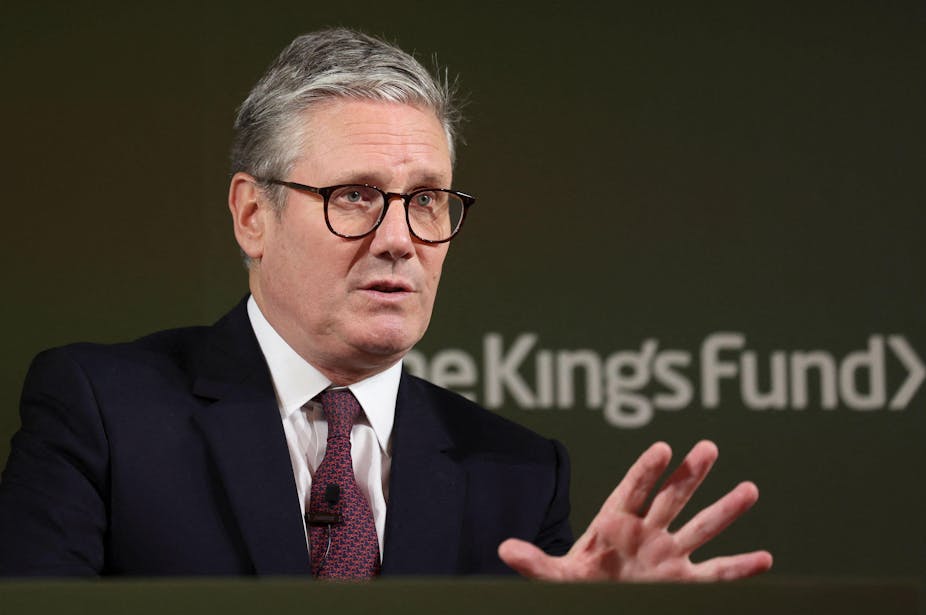
UK Prime Minister Keir Starmer announced plans to shield British industries from the fallout of U.S. President Donald Trump’s new tariff policy, pledging potential state intervention to support the most impacted sectors. Writing in The Telegraph, Starmer emphasized the need for an active industrial policy to protect the UK’s economy, stating, “We stand ready to use industrial policy to help shelter British business from the storm.”
Despite securing the lowest 10% import duty in Trump’s tariff announcement, Britain’s open economy remains vulnerable to global trade disruptions. Starmer acknowledged that while some may resist government intervention, the fast-changing global landscape requires pragmatic action over ideology. “We simply cannot cling on to old sentiments when the world is turning this fast,” he wrote.
The Labour leader said his administration would prioritize securing a trade deal with the U.S. that includes tariff exemptions. However, he also stressed that “everything necessary” would be done to defend the national interest. Emergency reforms may soon be introduced to cut regulatory red tape and offer targeted tax breaks to industries most affected.
The government plans to accelerate strategies to boost domestic competitiveness and build stronger trade alliances to minimize exposure to future global economic shocks. Meanwhile, British carmaker Jaguar Land Rover announced it would pause U.S. shipments for a month, raising alarms across the UK auto industry, which employs around 200,000 people.
While Starmer has ruled out immediate retaliation, he reiterated that “all options remain on the table.” The UK has already published a 400-page list of potential U.S. goods for retaliatory tariffs, signaling its readiness to respond if diplomatic efforts fail.
Starmer’s approach reflects a shift toward more assertive economic policies, aiming to safeguard British jobs and industries in an increasingly uncertain global trade environment.