


 Zelenskiy Slams US Over Deadly Russian Strikes on Ukraine
  RFK Jr. Launches Nationwide Vaccine Safety Review
  Djibouti Migrant Boat Capsizes, Killing 139 and Leaving 84 Missing
  Zelenskiy Slams US-Russia Diesel Deal as Funding War
  Trump Sanctions International Criminal Court, Sparking EU Backlash
  US Judge Blocks Trump Administration’s Taxpayer-Funded Political Ads
  Russian Strikes Kill Six in Ukraine, Including Three in Kharkiv
  Ripple Chairman Chris Larsen Donates $22.5 Million Ahead of US Midterms
  Flydubai Co-Pilot Planned Suicide Attack on Israel Airport, UAE Says
  US, EU Push for Action Against Asia’s Excess Factory Capacity
  Yandex Data Center Hit by Drone Strike as Russia-Ukraine Cyber Infrastructure Attacks Escalate
  Brazil Election: Lula and Bolsonaro Rally Ahead of October 25 Runoff
  Pakistan Declares Emergency in Khyber Pakhtunkhwa, Suspends Imran Khan’s PTI Government
  Trump Secures Russian Diesel Deal as US Fuel Prices Surge
  Trump Announces Russia-Ukraine Energy Ceasefire as Zelenskiy Awaits Details
  Houthis Warn Saudi Airports After Deadly Riyadh Attack
  North Korea Fires Ballistic Missiles as Tensions With South Korea Escalate


 Add as a preferred source on Google
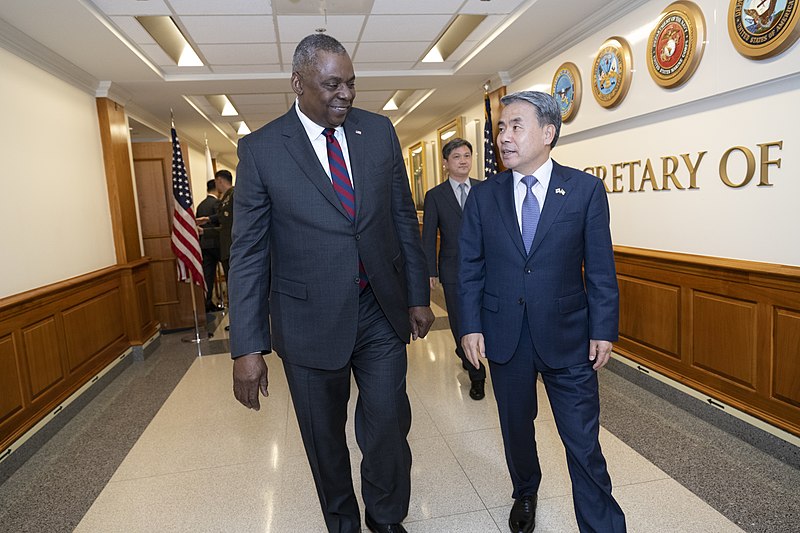
South Korea and the United States agreed to find new ways to be able to show the strength of the alliance. The pledge comes amidst a time when North Korea has been firing multiple missiles and artillery shells in a sign of flared tensions in the peninsula.
South Korean defense minister Lee Jong-sup visited Washington Thursday to meet with US defense secretary Lloyd Austin, and a joint statement shared after the meeting said both agreed to find new measures to show the alliance’s strength amidst Pyongyang’s provocations. Austin said that they agreed on extending their joint military air drills, also known as Vigilant Storm, which has also drawn the ire of North Korea.
“I’ve consulted with Minister Lee and we’ve decided to extend Vigilant Storm, which is our long-scheduled, combined training exercise to further bolster our readiness interoperability. We’ll continue to work closely together to develop options to protect the United States and our allies in the region,” said Austin.
“For nearly seven decades, this alliance has been an anchor of peace and security in the Korean Peninsula and across the broader Indo-Pacific.”
With North Korea on the agenda of their meeting, Austin stressed the “ironclad” commitment of Washington to South Korea. Austin said that the US deterrence included the country’s full range of nuclear and conventional and missile defense capabilities, referring to the fifth-generation fighters and the visit of the USS Ronald Reagan aircraft carrier to the peninsula this year.
Regarding Pyongyang, Lee said that they both condemned Pyongyang’s latest missile launch and that the result of the response of the alliance would be the downfall of North Korean leader Kim Jong-un’s regime.
The South Korean military previously fired missiles in response to Pyongyang’s launch on Wednesday, saying that three surface-to-air missiles were fired toward the north of its maritime border with North Korea. The response came hours after North Korea fired around 10 of its missiles into the sea, one of which landed less than 60 kilometers off the coast of South Korea.
Wednesday’s launch was the first time a North Korean missile landed in South Korean waters.







