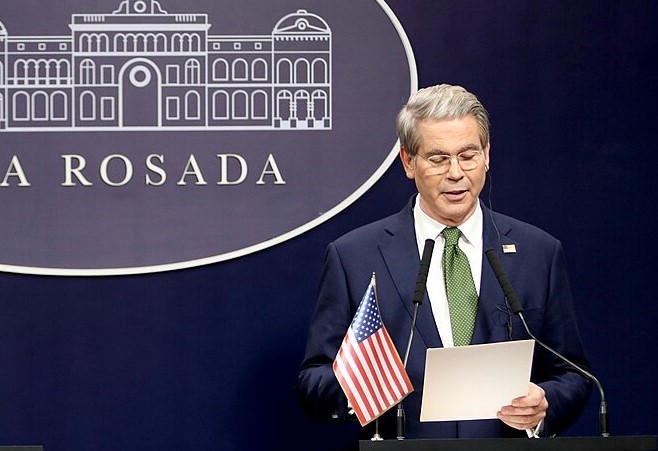
U.S. Treasury Secretary Scott Bessent announced Tuesday that tariff revenues have reached approximately $100 billion so far in 2025, with projections rising to $300 billion by year-end due to President Donald Trump’s aggressive trade policies. Speaking at a White House cabinet meeting, Bessent emphasized that most of the collections began in the second quarter, following the implementation of a sweeping 10% tariff on nearly all U.S. imports and increased duties on steel, aluminum, and automobiles.
The $300 billion estimate applies to the calendar year ending December 31, 2025, rather than the government’s fiscal year ending September 30. Achieving this would require a sharp acceleration in tariff collections and further expansions to current tariff rates.
According to the Treasury, gross customs duties hit a record $22.8 billion in May, nearly quadrupling from $6.2 billion a year earlier. From October through May, fiscal year 2025 collections totaled $86.1 billion, while calendar year collections through May reached $63.4 billion. By June 30, combined customs and excise tax collections surpassed $122 billion.
Bessent noted that the Congressional Budget Office projects $2.8 trillion in tariff income over the next decade, although he believes that figure may be too conservative.
President Trump reaffirmed his tariff push, announcing that beginning August 1, new “reciprocal” tariff rates will apply to nearly all U.S. trading partners. He also signaled potential negotiations to lower tariffs for certain countries. In addition, Trump revealed plans for a 50% tariff on copper imports, with further duties expected on semiconductors and pharmaceuticals.
As tariff policy becomes central to Trump’s economic agenda, the surge in collections highlights its significant impact on trade, inflation, and global supply chains.