
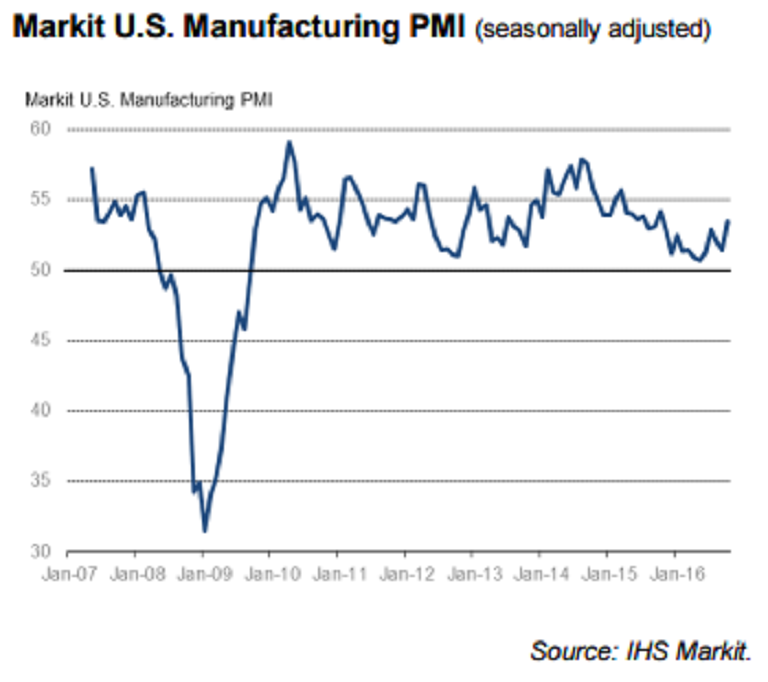
Manufacturing activity in the United States rebounded from a 3-month low during the period of October and manufacturers see a likely improvement in the country’s business conditions in the near future, turned higher by strong output and growth in new business.
U.S.’s October headline Markit Final U.S. Manufacturing Purchasing Managers’ Index (PMI) was slightly better than the earlier flash reading of 53.2, coming in at 53.4. That was a marked improvement over September’s 51.5 and the best reading recorded for a year.
Driving the PMI higher in the latest survey period was a strengthening in production, which was in turn supported by a marked upturn in new orders. In both cases, rates of growth indicated by respective sub-indices were at their strongest in a year, reportedly the result of firmer market demand and the development of new products.
Further, October’s survey implied that domestic demand was the key in driving the expansion of new order books. Rising production and new order requirements placed some pressure on capacity during October, with backlogs of work increasing to the greatest degree in three months.
"While output growth is accelerating, so too are inflationary pressures, which will further fuel speculation that the Fed will hike interest rates again in December," said Chris Williamson, Chief Business Economist, IHS Markit.

