


 European Auto Stocks Rise as EU-China Trade Deal Targets Hybrid Imports
  Fed’s Williams Signals One More Rate Hike Before Year-End
  RBA Says ASX Still Falls Short on Governance and Risk Controls
  Samsung, SK Hynix Shares Plunge as China Chip Competition Grows
  US Stock Futures Rise as Oil Prices Fall Ahead of Q3 Earnings
  Trump Demands Powell Resign Over Fed Renovation Cost Overruns


 Add as a preferred source on Google
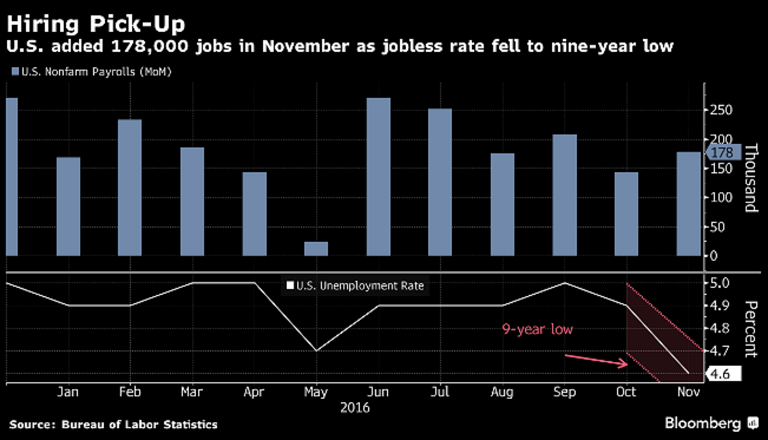
The unemployment rate in the United States dropped to near decade-low during the month of November, adding further certainty over the Federal Reserve December interest rate hike. Further, the country’s non-farm payrolls rose, while wages declined unexpectedly, painting a mixed picture of the country’s labor market.
The U.S. unemployment rate fell to a nine-year low of 4.6 percent in November, as employers added another 178,000 jobs, data released by the U.S. Department of Labor showed Friday. Further, the labor market witnessed the departure of more people, following higher rate of retirement, lowering the number of working-age people in the labor force to 62.7 percent.
Moreover, U.S. nonfarm payrolls increased by 178,000 jobs last month after increasing by 142,000 in October, data showed. Wages slipped for the first time in nearly a year though after two straight months of increases. Average hourly earnings fell three cents, or 0.1 percent, after rising 0.4 percent in October and gaining 0.3 percent in September.
"The decline in the unemployment rate and the unambiguous decrease in labor market slack are likely to place further upward pressure on inflation. This report easily clears the bar for a December rate hike," Reuters reported, citing Michael Gapen, Chief Economist, Barclays,New York.
Meanwhile, the dollar index has almost formed a 'doji' at 101.40, up 0.63 percent at the time of closing on the New York Stock Exchange, while at 5:00GMT, the FxWirePro's Hourly Dollar Strength Index remained highly bearish at -143.79 (a reading above +75 indicates bullish trend, while that below -75 a bearish trend). For more details, visit http://www.fxwirepro.com/currencyindex







