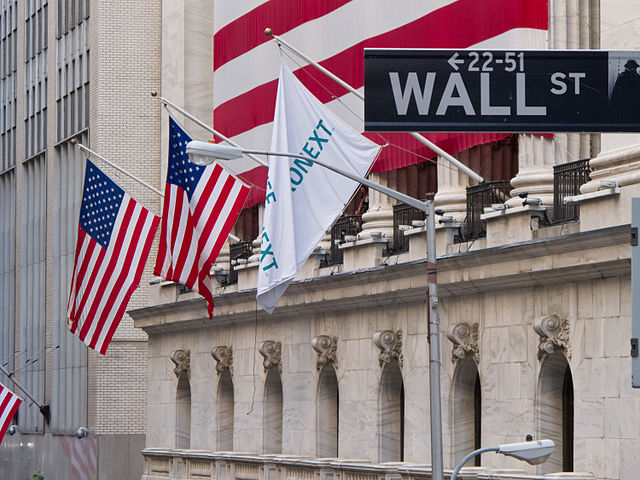
Wall Street closed sharply lower on Friday, ending a two-week winning streak as investors sold technology shares amid a continued pullback in the artificial intelligence (AI) sector and renewed concerns over inflation fueled by rising oil prices. Escalating tensions between the United States and Iran also added to market uncertainty.
The Nasdaq Composite fell 1.4% to 25,520.24, while the S&P 500 declined 1.1% to 7,454.74. The Dow Jones Industrial Average slipped 0.8% to 52,146.39. For the week, the Nasdaq lost 2.9%, the S&P 500 dropped 1.6%, and the Dow fell 0.9%.
Technology stocks led the decline after China's Moonshot AI introduced its new Kimi K3 large language model, intensifying competition in the global AI race. The announcement initially triggered a broad selloff in major technology companies and semiconductor stocks, although some losses were later reduced. Analysts said the launch highlights China's growing capabilities in AI development rather than representing an unexpected breakthrough.
Market sentiment improved slightly after reports that Meta Platforms is in early discussions to lease AI data center capacity to Anthropic in a deal reportedly worth around $10 billion. The news helped Meta recover part of its earlier losses, though the stock still finished the session down 2.8%.
Chipmakers remained under pressure as investors continued taking profits after the sector's strong rally earlier this year. The Philadelphia Semiconductor Index officially entered bear market territory after falling more than 20% from its recent peak, reflecting growing concerns about elevated AI valuations despite strong earnings from companies including TSMC and ASML.
Netflix also weighed on the technology sector after issuing weaker-than-expected revenue and profit guidance for the current quarter. Investors questioned the streaming company's growth outlook as competition in the industry continues to intensify.
Economic data offered some positive signals. The University of Michigan's preliminary consumer sentiment index rose to 54.4 in July, its highest level since February, while one-year inflation expectations eased to 4.2% from 4.6%. Earlier reports also showed moderation in June's Consumer Price Index (CPI) and Producer Price Index (PPI).
However, optimism faded as renewed military conflict between the United States and Iran pushed crude oil prices higher, reviving inflation concerns. Federal Reserve officials, including Cleveland Fed President Beth Hammack and Dallas Fed President Lorie Logan, warned that inflation remains a key challenge and suggested interest rates may need to stay elevated if price pressures persist.
Geopolitical risks remain firmly in focus after the U.S. carried out another round of strikes on Iranian targets and reports indicated additional military assets are being deployed to the region, raising concerns that further escalation could continue to pressure financial markets in the weeks ahead.