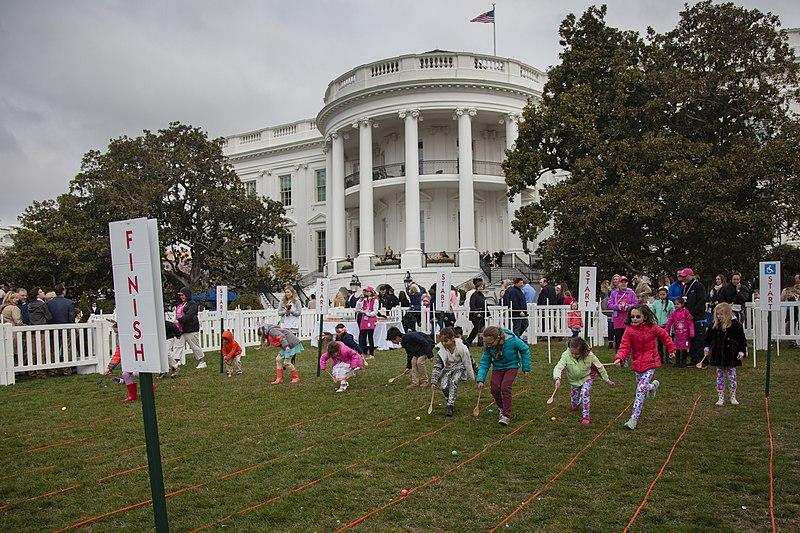
The annual White House Easter Egg Roll is a tradition that many children look forward to when visiting the White House. However, due to the coronavirus crisis, First Lady Melania Trump has decided to cancel the event.
Because of the increasing concerns of the coronavirus or COVID-19, Melania Trump has decided to cancel the annual White House Easter Egg Roll. The White House released a statement announcing the cancellation of the event that was supposed to take place on Monday, the 13th of April. The First Lady noted how this was a difficult decision to come to, considering that this would be a time that the Easter Egg Roll, a tradition that has been going on for years since 1878, would not happen.
“During this time, I encourage everyone to listen to state and local officials, and follow CDC guidelines in order to help protect the health and well-being of everyone,” said Melania.
The Easter Egg Roll usually occurred at the South Lawn of the White House, where the participating children submit their names in a lottery draw months in advance to be able to get an invite. 74,-000 colored eggs were rolled across the lawn by the children. The event was mostly made up of White House staff members and their families.
Event cancellations and postponements have been one of the measures taken in light of the increasing cases of coronavirus. CNN reports that the White House presented new guidelines for Americans to follow. Among the guidelines were not to stay in places such as bars, dine-in restaurants, and food courts. Citizens are also highly encouraged not to travel so as to prevent the spread of the virus, as well as not gathering in groups of more than 10 people.
States that have a community spread of the coronavirus are also advised, but not required, to close bars. However, cities like Philadelphia and San Francisco, and states like Maryland have already placed mandates for bars and restaurants to temporarily close down as soon as possible.
The guidelines are to be in effect for 15 days, according to President Donald Trump. These are just some of the measures advised by public health officials since the outbreak, such as working remotely or calling in sick when feeling unwell, and minimizing travel.