
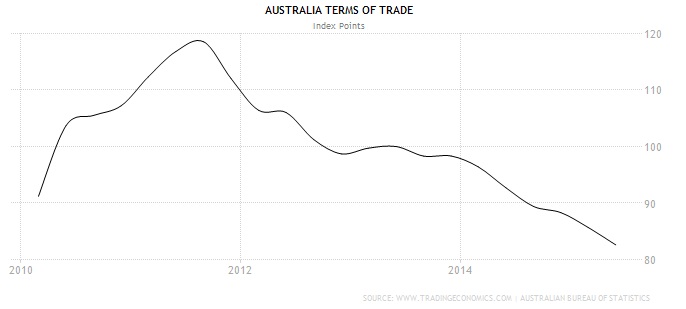
Australia's deteriorating terms of trade remains key concern for Reserve Bank of Australia (RBA). The central bank has even mentioned it in its monetary policy statement.
- Australia's terms of trade, which is ratio of export to import price index has fallen from 118.5 in 2011 to 82.5 as of second quarter 2015.
Weaker Australian Dollar, while protects the exporters from external shocks like current commodity rout, it also contributes to higher import cost.
As of latest data, Australian Dollar, might be contributing to the deterioration.
- In second quarter, while export price index declined by -4.4%, import price index has moved up by 1.4%.
- Since Australia is net exporter of commodities and imports other stuff, it is sitting on a double edged sword in terms of trade.
Moreover lower Australian Dollar and heavy inflow of money from China means higher inflation in real estate, which has remained key concern for RBA. Dwelling prices in Sydney and Melbourne have skyrocketed.
No wonder RBA is sitting mum, worried over lower rates might lead to house bubble and weaker Aussie might lead worsening of terms of trade.
Aussie is currently trading at 0.714 against Dollar.


