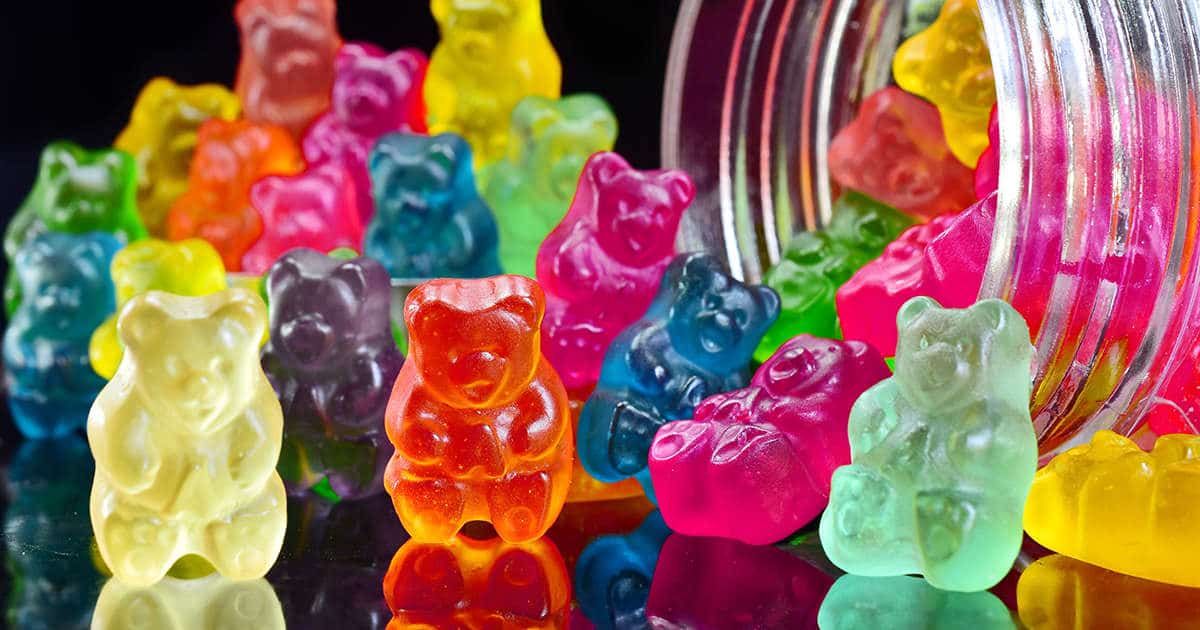
Wind turbine blades could eventually be recycled into gummies according to a Michigan State University professor,
This was discussed during the American Chemical Society's fall conference, which kicked off in Chicago this week.
John Dorgan, Ph.D., a Michigan State professor of Chemical Engineering and Materials Science, and his colleagues have developed a new material that combines glass fibers with both synthetic polymers and polymers derived from plant materials.
The resulting thermoplastic resin can also be dissolved and recast to make another set of blades, and may also be purified through a distillation process to make food-grade potassium lactate, which could be found in Gatorade sports drinks or various types of candies.
Other than gummy bears, kitchen sinks, taillights, and diapers could also be produced from wind turbine blades.
Because the lifespan of wind turbines’ massive fiberglass blades can be shorter than the rotors, generators, and other pieces, they often have to be replaced first.
Around 8,000 blades will be removed this year in the United States, and "only a handful" of landfills can accept them.


Longsys Raises $903 Million in Hong Kong IPO as Shares Debut Flat
An unexpected anomaly was found in the Pacific Ocean – and it could be a global time marker
We combed through old botanical surveys to track how plants on Australia’s islands are changing
Huawei, Chinese AI Chipmakers Raise Prices as HBM Shortage Bites
Cogent Biosciences Soars 120% on Breakthrough Phase 3 Results for Bezuclastinib in GIST Treatment
China vs. NASA: The New Moon Race and What's at Stake by 2030
Novartis M&A Strategy Faces Investor Scrutiny After Drug Setbacks
Gold Prices Steady as Hot PPI Boosts Fed Rate Hike Bets
GesiaPlatform Launches Carbon-Neutral Lifestyle App ‘Net Zero Heroes’
Volkswagen Job Cuts Put Lower Saxony Leader Under Political Pressure
What’s so special about Ukraine’s minerals? A geologist explains
FDA Pilot Program Eases Rules for Nicotine Pouch Makers
Fungi are among the planet’s most important organisms — yet they continue to be overlooked in conservation strategies
How ongoing deforestation is rooted in colonialism and its management practices
Burkina Faso and Mali’s fabulous flora: new plant life record released
Swimming in the sweet spot: how marine animals save energy on long journeys
OpenAI Weighs AI Development Slowdown Over Safety Risks 


