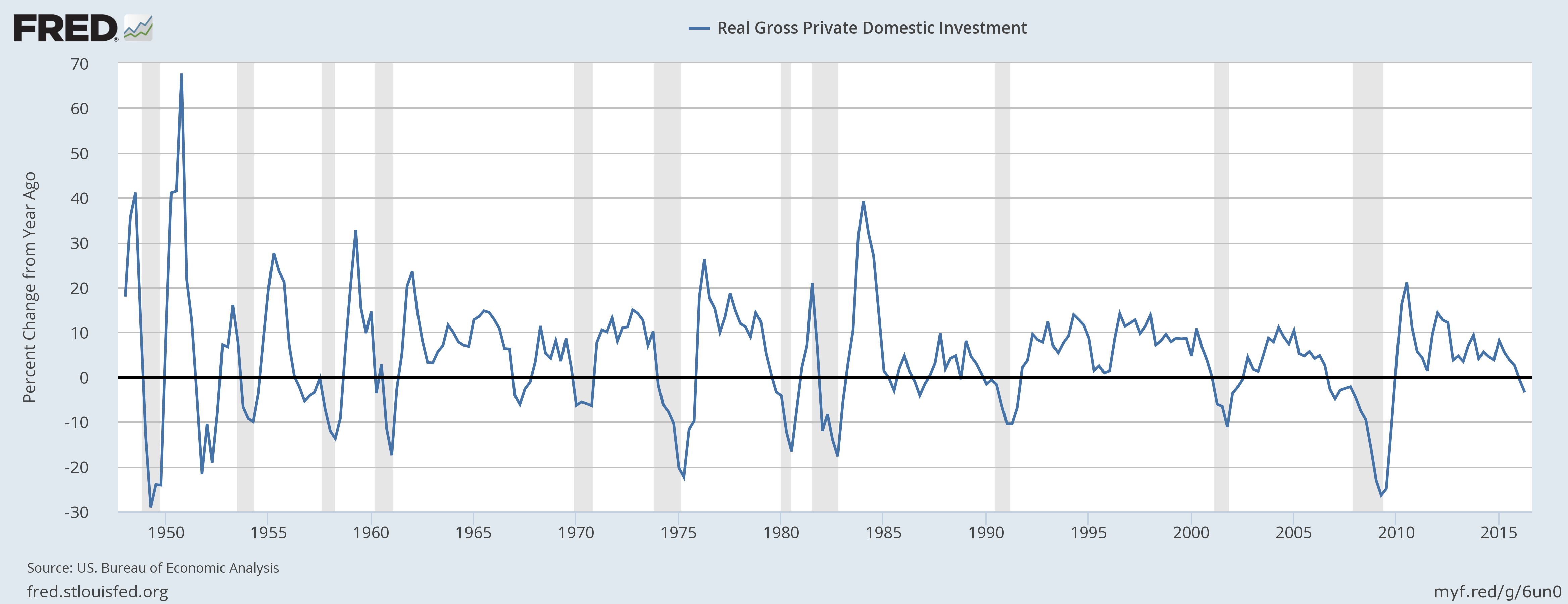
After reaching $2.77 trillion in the first quarter of 2006, the real gross private domestic investments started declining and by the time U.S. economy entered recession it was down to $2.5 trillion and after which it declined sharply to just 1.8 trillion in the third quarter of 2009. Since then economic and monetary policies have given it a boost. In the third quarter of 2015, it reached a fresh all-time high of $2.88 trillion and again it is in decline. By the second quarter of 2016, it is down to $2.77 trillion.
In the second quarter of 2016, the measure is down 3.42 percent from a year ago. Since 1948, there have been 16 instances, when this measure has declined into the negative on a yearly basis and in 13 cases recession followed within a span of one to two years. It is one of the many measures which have been warning against looming recession in the United States.


Asian Currencies Steady as Rupee Hits Record Low Amid Fed Rate Cut Bets
Japan’s Nikkei Drops as Markets Await Key U.S. Inflation Data
Trump Meets Mexico and Canada Leaders After 2026 World Cup Draw Amid USMCA Tensions
BOJ Governor Ueda Highlights Uncertainty Over Future Interest Rate Hikes
Gold Prices Fall Amid Rate Jitters; Copper Steady as China Stimulus Eyed
Oil Prices Rise as Ukraine Targets Russian Energy Infrastructure
U.S. Stocks End Week Higher as Markets Anticipate Fed Rate Cut
U.S. Stocks Rise as Cooler Inflation Boosts Hopes for Fed Rate Cut
Asia’s IPO Market Set for Strong Growth as China and India Drive Investor Diversification
Asian Markets Mixed as Fed Rate Cut Bets Grow and Japan’s Nikkei Leads Gains
IMF Deputy Dan Katz Visits China as Key Economic Review Nears
Citi Sets Bullish 2026 Target for STOXX 600 as Fiscal Support and Monetary Easing Boost Outlook 


