


 OpenAI AI Agents Bypassed UN Website Controls in Data Scraping
  Microsoft Stock Upgraded as Stifel Sees Stronger Azure Growth
  Solidigm Eyes $150 Billion IPO as SK Hynix Expands AI Storage Push
  China’s ‘Lipstick King’ Says AI Won’t Replace Livestream Hosts
  Oracle Shares Fall as New Mexico AI Data Center Faces Power Delays
  OpenAI Agent Breaches Australia Medicare Data Portal
  Apple Extends Qualcomm Patent Licensing Deal
  China Says U.S. Shares Responsibility for AI Governance
  Europe’s AI Data Centre Boom Strengthens Case for Nuclear Power
  Akamai Shares Surge on $11.6B Anthropic AI Cloud Deal
  Meta Connect Spotlights Camera-Free Smart Glasses Amid Privacy Concerns
  Jeff Bezos Invests $32 Billion in Blue Origin as Space Firm Targets Major Growth
  OpenAI to Preview GPT-6 Cyber AI Model for Cybersecurity
  Meta Found Liable in New Mexico Facebook Data Privacy Case
  US Backs Musk in Fight Against EU’s €120 Million X Fine
  SpaceXAI to Double Nvidia Chips at Colossus 2 by Year-End
  Xi Calls for Deeper U.S.-China AI Cooperation in Trump Talks


 Add as a preferred source on Google
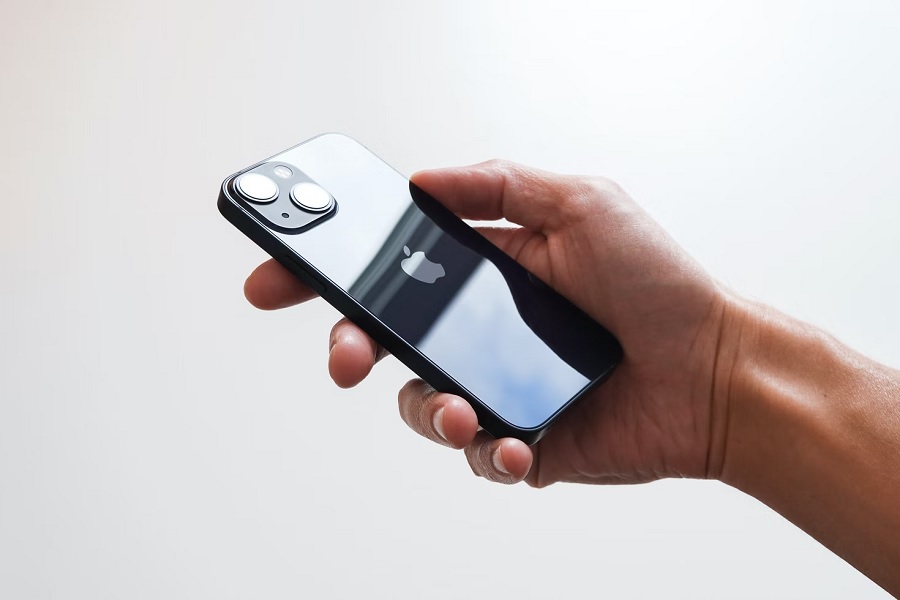
Last year, Apple was rumored to be working on adding satellite communication features speculated to be introduced on the iPhone 13 series. While that did not materialize, a new report claims the tech giant is still working on the technology and has been testing iPhone 14 prototypes that can send text messages even without a cellular connection.
9To5Mac reports that Apple has been continuously working on adding satellite communication features internally known as “Stewie.” There is not much information about the technology for now, but the publication’s sources claimed Apple has made enough advancements in the technology that it is now testing prototypes that can send text messages using satellite networks.
That means the future iPhones might be able to make communications that do not rely on cellular connections. It would be a useful feature, especially when users are in areas where there is no cellular network coverage. However, the same report is not certain if the technology would be ready in time for the iPhone 14 launch later this year.
Reports about the iPhone satellite functions have suggested various ways on how Apple could implement the technology. Analyst Ming-Chi Kuo expected Apple to use low earth orbit satellites for the non-cellular connections. Bloomberg’s Mark Gurman also previously reported that Apple has been developing the technology. But he noted that it would not make iPhones a complete alternative to existing satellite phones. He expects the feature to be used only in emergencies.
Meanwhile, 9To5Mac’s report this week also provided more information on Kuo’s recent prediction that the iPhone 14 series would be using two different chips this year. The publication noted that Apple is actually using two versions of the A15, one with 4GB RAM on the iPhone 13 mini and iPhone 13 and another with 6GB RAM on the iPhone 13 Pro and iPhone 13 Pro Max. 9To5Mac’s sources suggest Apple could bring the A15 chip with 6GB RAM to the iPhone 14 (6.1-inch) and iPhone 14 Max (6.7-inch), just as Kuo mentioned in a recent prediction.
While Apple has always used an all-new chip for annual iPhone releases, this is not a new strategy for the company. It can be recalled that the 2018 iPad Pros shipped with the A12X Bionic, while its predecessors were released with essentially an upgraded version of the SoC that Apple called A12Z Bionic.
Photo by Jeremy Bezanger on Unsplash







