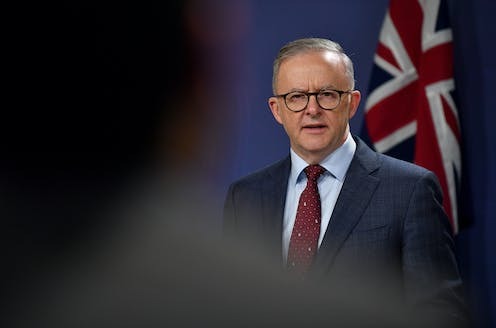
Australian Prime Minister Anthony Albanese has secured a second term after his center-left Labor Party defeated the conservative Liberal-National coalition in a surprising comeback victory. Despite trailing in polls earlier this year, Labor now leads in 85 of the 150-seat lower house electorates, with several seats still too close to call.
Albanese revealed he had a “warm and positive” conversation with U.S. President Donald Trump following the election win. The two leaders discussed ongoing engagement on the AUKUS defense pact and recent trade tensions, including a 10% U.S. tariff on Australian goods imposed in April. Albanese previously criticized the tariff, calling it “not the act of a friend.”
The AUKUS alliance, involving the U.S., U.K., and Australia, is a $238 billion initiative aimed at equipping Australia with nuclear-powered submarines. It remains central to Albanese’s foreign policy agenda.
Trump, when asked about the election, admitted he was unaware of the results but praised Albanese, calling him “very respectful” and “very nice to me.” Trump’s renewed prominence has impacted global politics, with his tariffs and policy stance stirring economic uncertainty.
Cost-of-living pressures and anxiety over Trump’s policies emerged as top voter concerns in the Australian election. A survey showed 48% of voters cited Trump-related uncertainties as a key issue, particularly regarding potential effects on their retirement savings.
The opposition’s strategy to align with Trump-style policies backfired, analysts say. Opposition leader Peter Dutton is at risk of losing his seat, and lawmaker Jason Wood admitted hopes of a Trump bump were dashed amid growing fallout over tariffs.
Albanese becomes the first Australian prime minister in 20 years to win back-to-back terms, buoyed by easing inflation and public backlash against conservative austerity proposals.