Asian currencies weakened on Monday as expectations for a Federal Reserve rate cut next month diminished and traders digested Japan’s softer-than-expected economic performance. The U.S. dollar strengthened broadly, with the US Dollar Index and its futures rising 0.1% in early Asian trade, adding pressure to regional foreign-exchange markets.
Market sentiment shifted after several Federal Reserve officials signaled that inflation remains stubborn and labor-market conditions have not eased enough to justify policy loosening. This pushback reduced confidence in near-term rate cuts, narrowing the odds of a December cut to roughly 40%. The extended U.S. data blackout caused by the recent government shutdown added further uncertainty, as investors were left waiting for crucial indicators such as the delayed September non-farm payrolls report, now set for release on Thursday.
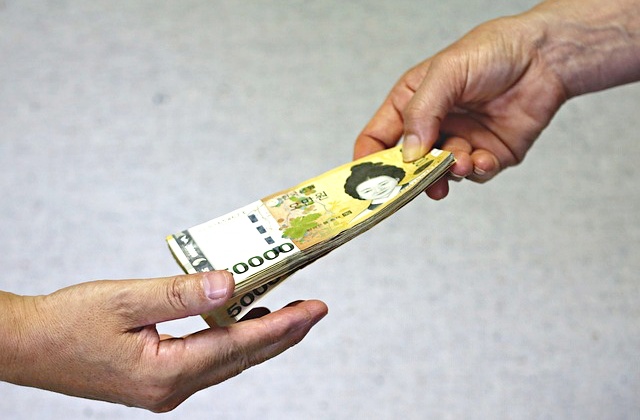
Against this backdrop, the South Korean won saw the steepest decline among Asian currencies, with the USD/KRW pair climbing 0.8%. The Chinese yuan also softened slightly, with both onshore USD/CNY and offshore USD/CNH pairs rising 0.1%. The Singapore dollar eased as USD/SGD gained 0.2%, while the Australian dollar slipped 0.2% against the greenback. In contrast, the Indian rupee remained relatively stable, showing minimal movement in the USD/INR pair.
Japan’s latest economic data offered mixed signals. The country’s GDP contracted at an annualized pace of 1.8% in the third quarter—still a decline, but milder than the projected 2.5% drop. Quarter-on-quarter growth fell 0.4%, slightly better than forecasts yet reflective of slowing momentum. Weak exports, partly due to new U.S. tariffs, weighed heavily on performance, while private consumption struggled under persistent inflation. The bright spot came from capital expenditure, which saw solid growth as businesses continued investing despite external headwinds. Following the data, the Japanese yen also edged lower, with the USD/JPY pair inching up 0.1%.
This combination of fading Fed easing expectations and Japan’s softer GDP reading kept Asian FX markets on the defensive, supporting the dollar’s firm tone across the region.