


 Jared Isaacman Confirmed as NASA Administrator, Becomes 15th Leader of U.S. Space Agency
  Neuralink Expands Brain Implant Trials with 12 Global Patients
  Trump Signs Executive Order to Boost AI Research in Childhood Cancer
  Blue Origin New Glenn Explosion Could Delay Launch Operations Until 2028
  FDA Pilot Program Eases Rules for Nicotine Pouch Makers
  Tabletop particle accelerator could transform medicine and materials science
  Is space worth the cost? Accounting experts say its value can’t be found in spreadsheets
  SpaceX Prioritizes Moon Mission Before Mars as Starship Development Accelerates
  Trump Administration to Launch Autism Initiatives Targeting Acetaminophen Use and New Treatment Options
  Eli Lilly’s Inluriyo Gains FDA Approval for Advanced Breast Cancer Treatment
  NASA Artemis II: First Crewed Moon Mission Since Apollo Takes Four Astronauts on 10-Day Lunar Journey
  SpaceX Delays Starship V3 Launch Ahead of Potential Record IPO
  Trump and Merck KGaA Partner to Slash IVF Drug Costs and Expand Fertility Coverage


 Add as a preferred source on Google
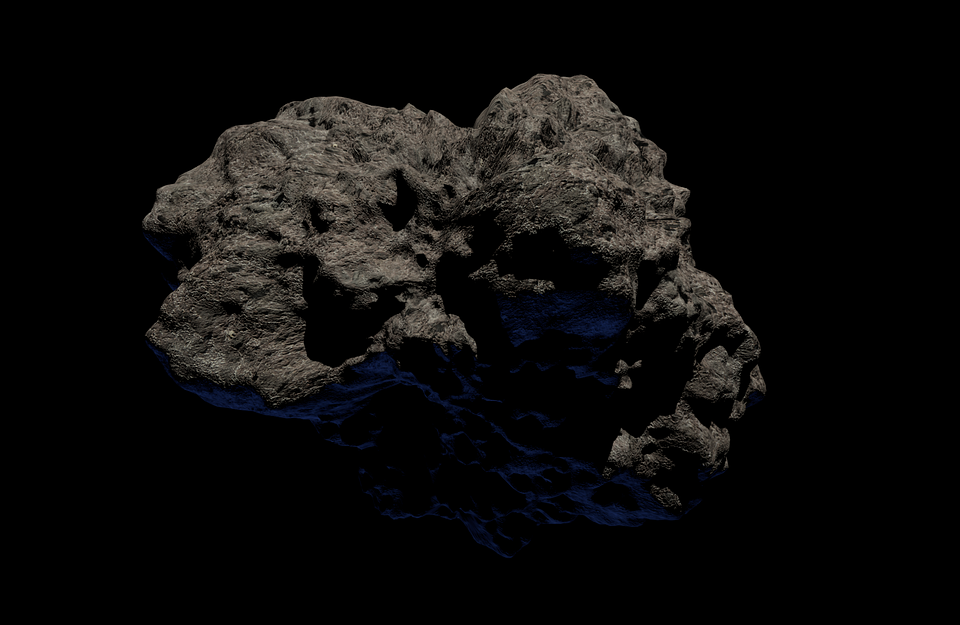
Space agencies are closely monitoring the activity of certain asteroids such as Bennu. However, amidst the interest surrounding the asteroid, a study suggests that the space rock may actually be hollow.
A study by researchers from the University of Colorado Boulder analyzed data from NASA’s Osiris-REx spacecraft of asteroid Bennu and found that the space rock may actually be hollow. By measuring Bennu’s gravitational field, they found that while the gravitational field was weak, the asteroid was spinning quickly. This would suggest that the core of the asteroid is hollow.
“If you can measure the gravity field with enough precision, that places hard constraints on where the mass is located, even if you can’t see it directly,” said Andrew French of NASA’s Jet Propulsion Laboratory and co-author of the study.
This finding would mean that asteroid Bennu may end up spinning into nothing as bits of its debris would end up all over space. This may happen in a million years, according to Professor Daniel Sheeres. “You could imagine maybe in a million years or less the whole thing flying apart. It was a little like someone was on the surface of the asteroid and throwing these marbles up so they could be tracked. Our colleagues could infer the gravity field in the trajectories these particles took.”
As Bennu completes a spin in a span of 4.3 hours, the researchers believe that Bennu’s gradual increase in speed and possible hollow center could mean that the asteroid would come apart entirely.
Over the weekend, an asteroid safely passed by Earth. The space rock was referred to as 2020 TY1, and NASA classified the asteroid as a Near-Earth Object or NEO. TY1 passed by the planet in the early hours of Saturday, November 7. The asteroid got as close as 0.03763 astronomical units or around 3,500,000 miles away from Earth. This is still extremely far for us, but it is close enough to be noticeable.
TY1 was spotted to be traveling through space at a speed of 13 kilometers per second or 29,124 miles per hour. The asteroid was also a relatively large space rock, measuring around 600 feet in diameter.







