


 NASA Resumes Cygnus XL Cargo Docking with Space Station After Software Fix
  Eli Lilly’s Inluriyo Gains FDA Approval for Advanced Breast Cancer Treatment
  Trump and Merck KGaA Partner to Slash IVF Drug Costs and Expand Fertility Coverage
  SpaceX Prioritizes Moon Mission Before Mars as Starship Development Accelerates
  Blue Origin New Glenn Explosion Could Delay Launch Operations Until 2028
  FDA Pilot Program Eases Rules for Nicotine Pouch Makers
  China vs. NASA: The New Moon Race and What's at Stake by 2030
  Neuralink Expands Brain Implant Trials with 12 Global Patients
  Trump Administration Releases New UFO Files and Apollo Mission Records
  Is space worth the cost? Accounting experts say its value can’t be found in spreadsheets
  Blue Origin’s New Glenn Achieves Breakthrough Success With First NASA Mission
  Cogent Biosciences Soars 120% on Breakthrough Phase 3 Results for Bezuclastinib in GIST Treatment


 Add as a preferred source on Google
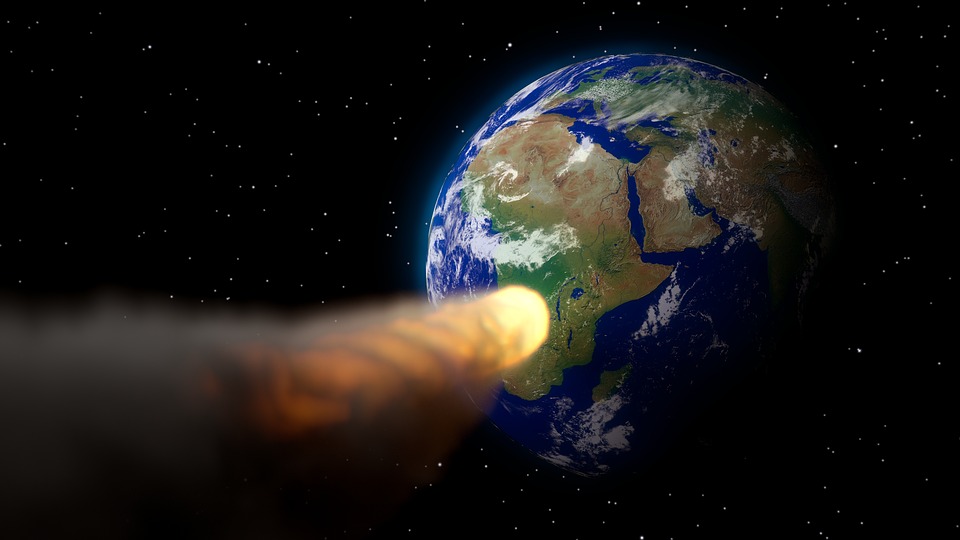
It appears that another asteroid is spotted going Earthbound by NASA recently. A report reveals that a space rock is on its way for a close encounter with the planet at a speed of 21,100 miles per hour.
NASA’s asteroid trackers caught sight of a space rock traveling towards the vicinity of the Earth at a speed of about 21, 139 miles per hour. The agency has referred to the asteroid as 2020 CH after its date of discovery and classified it as a Near-Earth Object or NEO. It was first seen a week prior, but NASA has confirmed that it is bound for a close encounter with Earth. It is predicted to come close by the 10th of February. 2020 CH is estimated to measure between 75.4 feet to 179.6 feet in diameter, making it a fairly small asteroid.
If ever 2020 CH were to collide with Earth, it would likely burn upon contact with the atmosphere because of its size. However, there is still a chance that this small asteroid may make it through and crash, based on the 2013 Chelyabinsk incident, which proved that even small asteroids could pack quite a punch when making an impact for the ground or a body of water.
Fortunately, the asteroid is not expected to collide with Earth once it makes its approach. The closest it will get would be from a distance of 0.02975 astronomical units. This is equivalent to 4.45 million kilometers in human measurements. Although this is still incredibly far away, it is still close enough to be noticed by NASA.
Although small asteroids can burn up upon contact with the Earth’s atmosphere, fragments of the rock may still make it through and cause some damage as well. But it is not just the atmosphere that can destroy a small asteroid. New research has revealed that the lights emanating from stars can also destroy an asteroid.
The electromagnetic radiation that comes from dying stars just past their red giant phase would be strong enough to send speeding asteroids into destruction. According to the researchers, the sun alone can destroy the asteroid belt in a span of a billion years.







