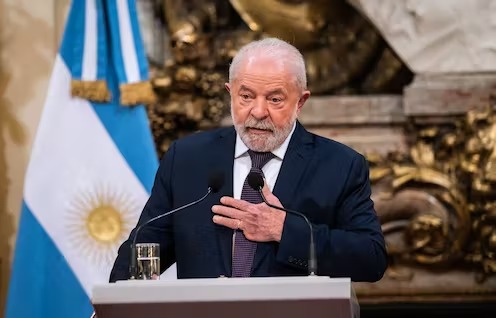
Brazil’s government strongly condemned the U.S. military attack on Venezuela and the capture of its leader, calling the move a violation of national sovereignty and a dangerous precedent for the international community. President Luiz Inacio Lula da Silva described the operation as crossing an “unacceptable line” and urged a firm response from the United Nations, while reiterating Brazil’s commitment to dialogue, diplomacy, and regional stability.
In a statement published on social media platform X, Lula said the U.S. action represented a serious affront to Venezuela’s sovereignty and risked undermining international norms. He emphasized that Brazil remains willing to help mediate and promote cooperation to avoid further escalation in Latin America. Lula has previously warned that any armed intervention in Venezuela could result in a humanitarian catastrophe.
The U.S. attack, which resulted in the removal of President Nicolas Maduro, marked Washington’s most direct military intervention in Latin America since the 1989 invasion of Panama. U.S. President Donald Trump praised the operation, calling it one of the most successful military actions in American history and highlighting what he described as the effectiveness and strength of the U.S. armed forces.
In response to the rapidly evolving situation, Brazilian officials convened an emergency cabinet meeting on Saturday to assess potential impacts, particularly the possibility of increased Venezuelan refugee flows into northern Brazil. Lula, who was outside the capital Brasília due to the holiday season, participated in the meeting virtually.
Brazil’s foreign ministry later stated that there had been no unusual movement at the border so far. Brazil has been a key destination for Venezuelan refugees since 2018, welcoming more than 150,000 people fleeing economic and political instability. The northern states of Roraima and Amazonas are the only Brazilian states sharing a border with Venezuela, with the majority of refugees entering through Roraima.
Roraima Governor Antonio Denarium said the border remains open but claimed Venezuelan authorities are restricting their citizens from leaving, while Brazilians are allowed to cross freely. The situation at the border could not be independently verified, and Venezuelan officials were not immediately available for comment.
Brazil’s foreign ministry also confirmed that Foreign Minister Mauro Vieira held talks with his Venezuelan counterpart, underscoring Brazil’s diplomatic engagement amid rising regional tensions.