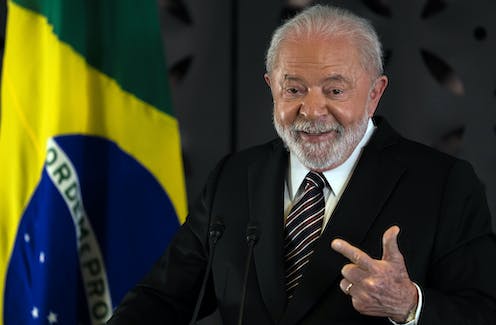
Brazilian President Luiz Inacio Lula da Silva has pledged a swift response after U.S. President Donald Trump imposed steep new tariffs on Brazilian exports. The White House announced on Wednesday that all goods imported from Latin America’s largest economy would now face a 50% tariff—more than double previous levels.
In a firm response, Lula’s office issued a statement declaring that Brazil will not remain passive. “Any measure to unilaterally raise tariffs will be responded to in accordance with Brazil’s Economic Reciprocity Law,” the statement read. The law empowers the Brazilian government to impose equivalent trade measures against countries that unfairly increase trade barriers.
This unexpected move from Washington threatens to escalate trade tensions between the two countries, whose bilateral trade reached nearly $80 billion last year. Brazil, a major exporter of agricultural products, iron, and industrial goods to the U.S., could see significant impacts on its economy if countermeasures are not taken quickly.
Analysts warn that retaliatory tariffs by Brazil could hit key American industries such as tech, chemicals, and machinery, potentially leading to broader trade disruptions. Lula’s administration is currently reviewing possible actions, which may include increased tariffs on select U.S. imports or restrictions on American investments.
This is not the first time Trump has clashed with trading partners over tariffs. His administration previously targeted China, the EU, and other allies, citing the need to protect American jobs and manufacturing. With Brazil now in the crosshairs, global markets are bracing for the potential fallout.
The situation remains fluid, but Lula’s strong stance signals that Brazil is prepared to match U.S. trade aggression with equal force. Both governments have yet to confirm if negotiations will be pursued to de-escalate tensions.