


 Trump Orders Reduction in U.S.-South Korea Military Drills, Citing Kim Jong Un Ties
  New Zealand Labour Backs Social Media Ban for Under-16s
  Iceland Counts Votes in Close EU Membership Talks Referendum
  Iran Weighs Conditions to Reopen Strait of Hormuz
  FAA to Pause Reagan National Airport Flights for Freedom 250 IndyCar Race
  South Korea Leveraged Chip ETF Trading Plunges After New Rules
  ICE to Complete Nationwide Body Camera Rollout by End of August
  Nvidia Revenue Soars 106% as AI Demand Hits ‘Inflection Point’
  Countries Tighten Social Media Bans for Children
  U.S. Probes Apex Logistics Over Nvidia AI Chip Shipments to China
  Alibaba Raises $10.2 Billion to Expand AI Infrastructure
  German Industry Pushes Merz for Tougher China Trade Policy
  Bessent Defends US Yen Intervention Over Treasury Market Risks
  Israel Weighs Expelling UK Officials From Gaza Coordination Center
  Carney’s Trump Tariff Pushback Wins Canadian Support, but Economic Risks Mount
  Nepal Declines Foreign Rescue Aid After Deadly Flash Flood
  SEC Clears Path for Data Center Securitizations as AI Financing Demand Surges


 Add as a preferred source on Google
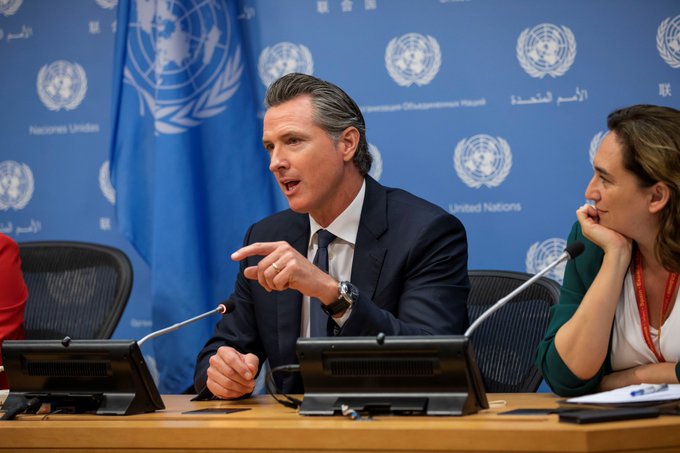
California Governor Gavin Newsom has signed into law a groundbreaking measure aimed at regulating advanced artificial intelligence models. The new legislation, Senate Bill 53 (SB 53), requires major AI developers—including OpenAI, Google, Meta, Nvidia, and Anthropic—to publicly disclose how they plan to mitigate catastrophic risks from their cutting-edge AI systems.
Newsom emphasized that California, home to the nation’s largest cluster of AI companies, is taking the lead in setting rules for a technology that will shape the economy and society. He stated the law balances innovation with public safety, positioning the state as a model for potential federal legislation.
The law applies to companies with over $500 million in annual revenue. These firms must conduct assessments on risks such as AI models escaping human control or being misused to develop bioweapons. They are required to release those assessments to the public, and violations may result in fines of up to $1 million.
This marks a shift from California’s earlier attempt at AI regulation, which Newsom vetoed in 2023 due to industry backlash. That proposal demanded costly third-party audits and imposed heavy financial penalties. SB 53, however, adopts a more balanced framework, which Jack Clark, co-founder of Anthropic, praised as promoting both safety and innovation.
Still, some in the tech sector are concerned. Critics, including Andreessen Horowitz’s head of government affairs, warned that state-led laws risk creating a fragmented regulatory environment across the U.S. With similar AI laws passed in Colorado and New York, industry leaders fear compliance challenges for startups and smaller firms.
Federal lawmakers are now under pressure to act. Representative Ted Lieu highlighted the need for national standards, asking whether Americans prefer “17 states” regulating AI independently or a unified approach from Congress. Meanwhile, Representative Jay Obernolte is drafting federal AI legislation that could preempt state-level rules.
The California law is widely seen as a catalyst that may accelerate Washington’s efforts to establish a nationwide AI regulatory framework.







