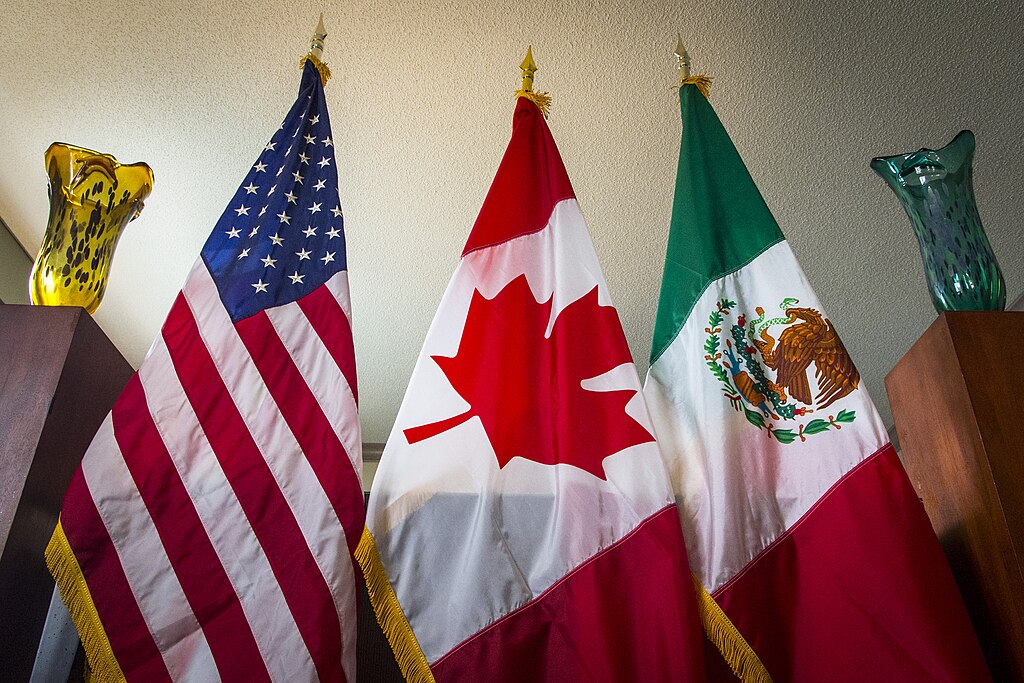
Canada and Mexico pledged to deepen cooperation and reinforce their partnership with the United States during Prime Minister Mark Carney’s visit to Mexico City on Thursday. Carney and Mexican President Claudia Sheinbaum emphasized the importance of expanding economic and security ties, while reaffirming their commitment to the North American free trade agreement, which faces a scheduled review next year.
Carney expressed confidence that the three nations can make necessary adjustments to boost competitiveness in the region. Mexico and Canada rank as the U.S.’s top trading partners, while the U.S. remains the leading trade partner for both. Carney’s two-day mission marks the first bilateral visit by a Canadian prime minister to Mexico in eight years, with officials acknowledging strong relations but noting room for closer engagement.
The leaders agreed to explore greater cooperation in combating transnational crime and improving border security, signaling interest in broadening their pact beyond trade to include defense and security. Carney stressed unity, rejecting suggestions that Canada might seek a better solo trade deal with Washington. Sheinbaum added that collaboration would continue in a spirit of respect.
The North American trade pact, renewed in 2018, faced strains under former U.S. President Donald Trump, who imposed tariffs and fueled speculation about separate deals. Analysts note that both Canada and Mexico benefit more from working together to counter potential U.S. trade threats than competing against one another.
While Canada’s efforts to expand ties with Washington have stalled, Carney highlighted the need to diversify markets. In 2024, bilateral trade with Mexico reached C$55.4 billion ($40.2 billion), far below the C$924.4 billion exchanged with the U.S. Still, Carney projected stronger future growth, citing aligned values and ambitions that could drive greater trade and investment over the next three decades.