
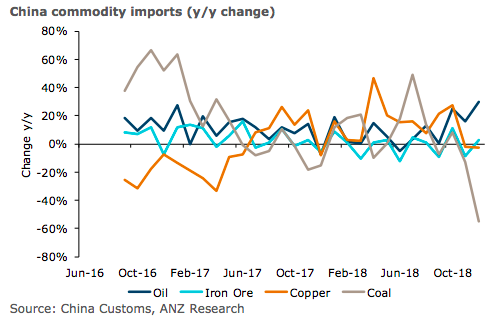
China’s commodity imports were mixed in December. Metals imports ended the year on a weak note, with copper down on a y/y basis. At the same time, imports of oil and natural gas remained strong. This suggests consumers remained cautious as trade tension rose in H2 2018.
"We expect this could turn around if talks ease the uncertainty, resulting in restocking of inventories in early 2019," ANZ Research reported.
Crude oil imports in December rose strongly, as refiners took advantage of higher refining margins amid a rush to utilise quotas before year end. Import volumes reached a record high of 43.8mt, bringing the annual growth rate to 10.1 percent. China’s ‘blue sky’ policy benefitted natural gas, with imports up 68 percent in 2018.
The ban on coal imports at certain ports resulted in volumes collapsing in December. However, with the ban being lifted in January, this weakness persisting for too long. Iron ore imports rose slightly in December (+3 percent y/y), matching anecdotal evidence suggesting steel mills in China are starting to restock ahead of the end of winter production curbs.

