SILVER SPRING, Md., Aug. 29, 2016 -- Obesity is a well-established major risk factor for developing diabetes, with almost 90% of people living with type 2 diabetes having obesity or overweight. Even with the close tie between obesity and type 2 diabetes, new research shows that healthcare clinicians prescribe 15 times more antidiabetes medications than those for obesity. Although six antiobesity medications are now approved by the Food and Drug Administration (FDA) for treating obesity when combined with a reduced-calorie diet and increased physical activity, this research points out that only 2% of the eligible 46% of the U.S. adult population is receiving these medications. The research is published in the September issue of Obesity, the scientific journal of The Obesity Society.
|
|||||
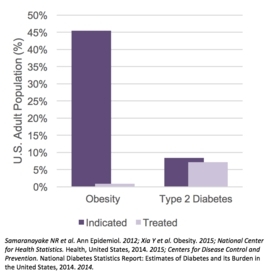
"Given the close tie between obesity and type 2 diabetes, treating obesity should be an obvious first step for healthcare providers to prevent and treat diabetes," says Catherine E. Thomas, MS, the lead researcher from Weill Medical College of Cornell University. "By treating obesity, we may be able to decrease the number of patients with type 2 diabetes, among other related diseases and the medications used to treat them."
Researchers pointed to a number of barriers to obesity treatment including lack of reimbursement for healthcare providers, limited time during office visits, lack of training in counseling, and competing demands, among others.
"A greater urgency in the treatment of obesity – on the part of clinicians and patients – is essential," continued Thomas. "We're talking about prolonged and better quality of life for patients."
To conduct the study, Thomas et al. performed a retrospective analysis of 2012 – 2015 data from the IMS Health National Prescription Audit and Xponent databases to examine prescribing trends for antidiabetes and antiobesity medications. According to the analysis, the number of prescribed antidiabetes medications (excluding insulin) was 15 times the number of prescribed antiobesity medications. Medical specialties prescribing the majority of the antiobesity medications included family medicine/general practitioners, internal medicine clinicians and endocrinologists.
"By comparing the adoption rate of new antiobesity medications to the considerably faster rate for new diabetes medications, this new research provides an important snapshot of the problem," says Ted Kyle, RPh, MBA, founder of ConscienHealth in a commentary accompanying the research.
"Obesity is a serious disease that is not getting serious treatment," says Charles Billington, MD, FTOS, past president and spokesperson for The Obesity Society and Director of Medical Weight Management at the University of Minnesota. "We are missing the opportunity among patients with serious obesity-related illness to provide the full range of proven, safe and effective therapies. It's time to start treating people with obesity as we would others with chronic diseases – with compassion and access to evidence-based care in a clinical setting."
According to the commentary by Kyle, future research should aim to better quantify the benefit of obesity medications in real clinical settings as measured by patient outcomes. Additionally, a better understanding of the systematic barriers to adoption of obesity pharmacotherapy is necessary.
The study* and its accompanying commentary are published in the September issue of Obesity, the scientific journal of The Obesity Society.
*Disclosure: The authors of this research were given access to the prescription databases through a partnership with Vivus, Inc.
This press release can be published in full or in part with attribution to The Obesity Society.
Before writing, learn more about selecting appropriate imagery and language when talking about people with obesity.
About The Obesity Society
The Obesity Society (TOS) is the leading professional society dedicated to better understanding, preventing and treating obesity. Through research, education and advocacy, TOS is committed to improving the lives of those affected by the disease. For more information visit: www.Obesity.org. Connect with us on social media: Facebook, Twitter and LinkedIn. Find TOS disclosures here.
A photo accompanying this release is available at: http://www.globenewswire.com/newsroom/prs/?pkgid=41250
CONTACT: Chelsea Clark, The Obesity Society, cclark@obesity.org