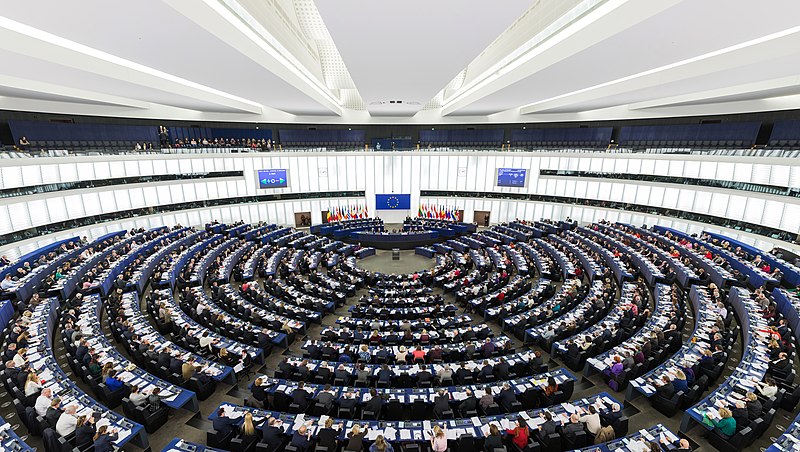
This week, the European Parliament approved the legislation involving renovating buildings to save energy. The bill aims to ease the increasing energy bills and help reduce dependence on Russian energy products much faster.
The EU Parliament on Tuesday voted in favor of the legislation that would help save energy by renovating buildings that make up 40 percent of the European Union’s energy use and use fossil fuels. The new bill would require facilities to be upgraded to use methods such as insulation or better heating systems. The legislation was approved by 343 lawmakers out of the 637 that were present.
The new rules would require all EU buildings with a G energy performance certificate which represents the worst-performing 15 percent per EU country, along with buildings that have an F energy performance certificate, to renovate within the decade.
“Soaring energy prices have put the focus on energy efficiency and energy saving measures. Improving the performance of Europe’s buildings will reduce bills and dependence on energy imports,” said the EU parliament’s lead lawmaker on the legislation Ciaran Cuffe.
EU countries will be required to renovate non-residential buildings to an E grade by 2027 and to a D grade by 2030. Residential buildings will follow later deadlines of an E grade in 2030 and a D grade by 2033. After the approval of the parliament, the final legislation is up for negotiation with countries in the bloc.
However, some EU countries like Italy have shown resistance and are looking for a delay as well as exemptions that Rome says could not be afforded by the Italian government and homeowners. Italian energy minister Gilberto Pichetto said Rome would negotiate for a law that recognizes Italy’s objectives, describing the legislation as “unsatisfactory for Italy.”
On Wednesday, the EU’s financial services chief Mairead McGuinness told the EU Parliament that the US Silicon Valley Bank has a limited presence in the bloc. However, McGuinness said the collapse of the bank is a reason why lightly regulated foreign lenders must adhere to stricter rules in the EU.
“Silicon Valley Bank has a very limited presence in the European Union and we are in touch with the relevant supervisory authorities,” said McGuinness. “The direct impact of these bank failures on the EU seems to be limited.”