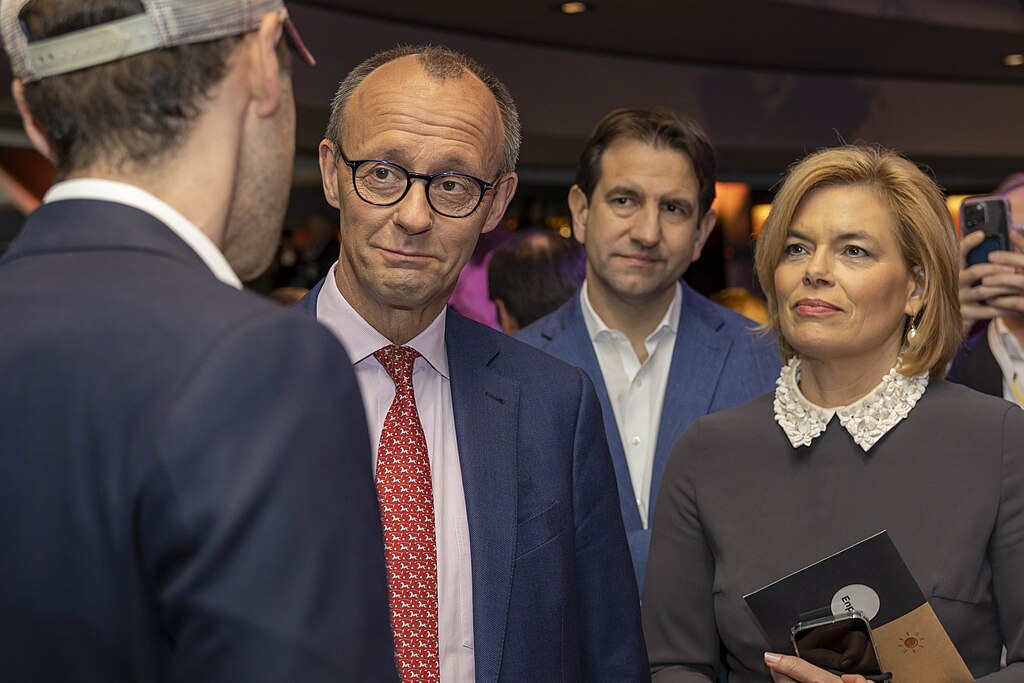
Germany's probable next chancellor, Friedrich Merz, has raised concerns over NATO’s stability following U.S. President Donald Trump’s recent remarks urging Europe to take greater responsibility for its own defense. Speaking to ARD after his conservative party's election victory, Merz questioned whether NATO would remain "in its current form" by June, emphasizing Europe's urgent need to establish an independent defense capability.
The Trump administration's stance has alarmed European allies, with U.S. Secretary of Defense Pete Hegseth stating that "stark strategic realities" mean the U.S. may no longer prioritize Europe's security. Additionally, Washington announced talks with Russia to end the Ukraine war—without European involvement.
Merz’s comments have sparked reactions across Europe, with Dutch Foreign Minister Caspar Veldkamp declaring, "The era that started at the fall of the Berlin Wall is now over." He stressed that Europe must adopt a realistic approach to its relations with the U.S.
On Friday, Merz told ZDF that Germany must prepare for Trump possibly weakening NATO’s mutual defense commitment. He suggested that Berlin explore alternative security arrangements, including discussions with France and Britain about expanding their nuclear deterrence.
Merz, known for his transatlantic stance, has also taken a tougher position on Russia than outgoing Chancellor Olaf Scholz. He has indicated that under his leadership, Germany might send Taurus missiles to Ukraine—an option Scholz previously rejected.
As NATO faces uncertainty, Merz’s statements highlight growing concerns over Europe’s defense autonomy. With shifting U.S. priorities, European leaders are being urged to reconsider their long-standing reliance on Washington.