International troops could be deployed to the Gaza Strip as early as next month as part of a United Nations–authorized International Stabilization Force (ISF), according to U.S. officials cited by Reuters. The proposed force is a central element of the second phase of U.S. President Donald Trump’s Gaza peace plan, which aims to stabilize the territory following a fragile ceasefire that began on October 10.
U.S. officials said the ISF would not directly engage in combat with Hamas, though its mandate includes supporting the demilitarization of Gaza. Planning efforts are already underway, with the U.S. Central Command set to host a high-level conference in Doha on December 16. Representatives from more than 25 countries are expected to attend, discussing issues such as troop composition, command structure, housing, training, and rules of engagement. An American two-star general is reportedly being considered to lead the force, though no final decision has been made.
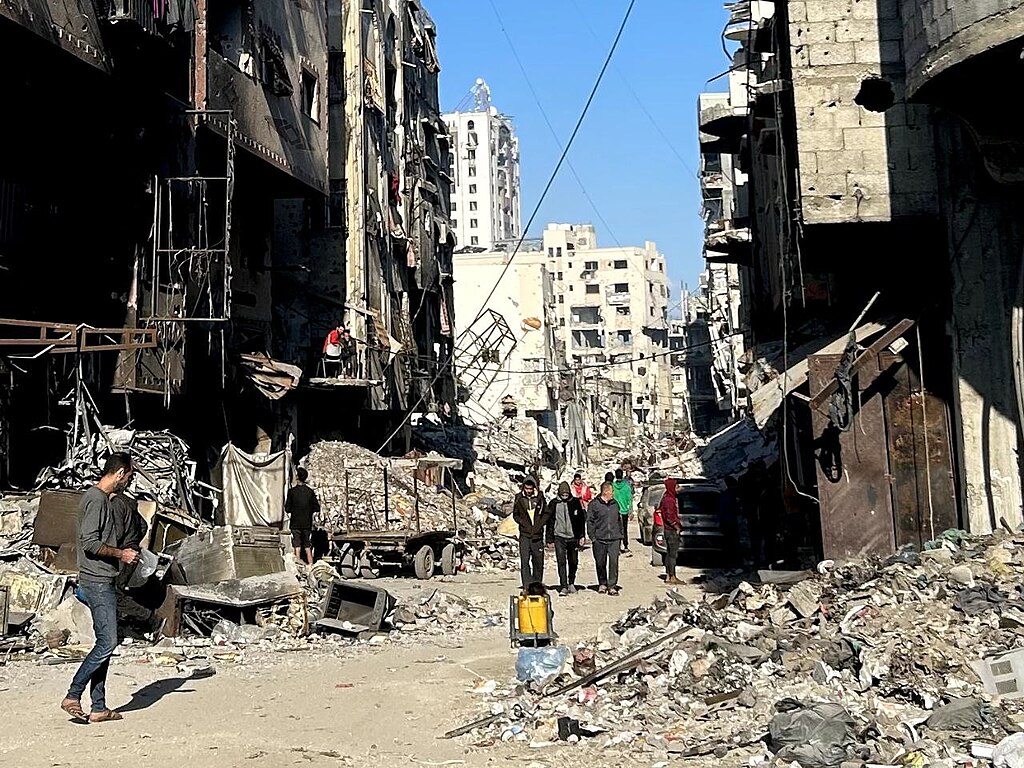
The ISF is intended to deploy initially in areas of Gaza currently controlled by Israel, which accounts for roughly 53% of the territory. As stability is established, Israeli troops would gradually withdraw based on agreed milestones tied to demilitarization. Nearly two million Palestinians currently live in the remaining Hamas-held areas, making stabilization efforts highly sensitive and complex.
Indonesia has already expressed readiness to contribute significantly, with plans to deploy up to 20,000 troops focused on health services and reconstruction. Indonesian officials confirmed that preparations are ongoing, including the development of the force’s organizational structure.
A U.N. Security Council resolution adopted on November 17 authorized the creation of a Board of Peace and the establishment of the ISF. The resolution empowers the force to work alongside newly trained Palestinian police to ensure security and oversee the dismantling of military infrastructure and the permanent decommissioning of weapons held by non-state armed groups.
However, major challenges remain. Hamas has stated it has not formally discussed disarmament with mediators and maintains it will not lay down arms without the establishment of a Palestinian state. While U.S. officials note that the ISF’s mandate allows the use of force if necessary, discussions around enforcement and rules of engagement are still ongoing, underscoring the uncertainty surrounding Gaza’s next phase.