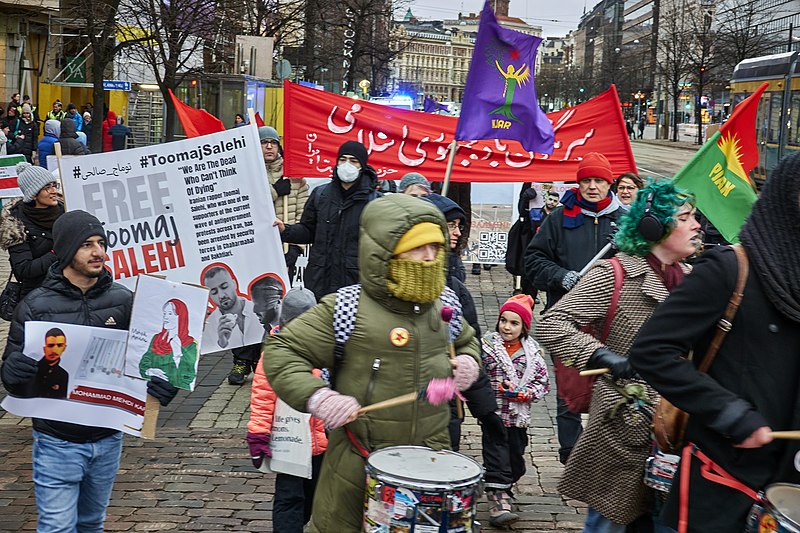
Iran has been facing months of unrest since September, with widespread protests across the country against its clerical leaders. Iranian authorities have now sought other tactics to reinforce its crackdown on women who refuse to wear hijab in public spaces.
Tehran has now sought to enforce other tactics to penalize women who remain defiant of the obligatory Islamic hijab rule in the country. Such tactics include installing security cameras in public spaces and asking businesses to deny providing goods or services to women who are not wearing their veils. This has replaced the country’s so-called morality police, which became a flashpoint in the months of protests against the clerical government by women and students.
The measures have yet to make progress against the opposition of women to wearing the hijab and may likely worsen the country’s economic crisis if they also result in businesses closing due to such policies, according to Iranian activists. Residents told Reuters that the vehicles of the morality police, made up of both male and female crew, have largely vanished from the cities they used to patrol as a result of the unrest.
Iranian officials have also said patrols by the morality police will no longer lead Tehran’s response to the movement in defiance of the clerical government.
This comes as Iran is facing months of unrest since September, following the death of a Kurdish Iranian woman, Mahsa Amini, while in the custody of the morality police for allegedly flouting the Islamic dress code. The protests that ensued marked the biggest challenges to Iran’s leaders since the 1979 Revolution.
Despite these measures, along with warnings of heavy fines and imprisonment, many Iranian women have remained defiant by skipping the headscarf when in public places. Tehran has blamed the unrest on its foreign adversaries, such as the United States and Israel.
Over the weekend, Iranian Supreme Leader Ali Khamenei expressed his dislike of a US military presence in neighboring Iraq during a visit by Iraqi President Abdul Latif Rashid to Tehran. Khamenei warned Rashid against Iraq having relations with the United States, saying that Washington is “not friends with Iraq.”
“The Americans have friendships with no one and are not even loyal to their European friends,” said Khamenei, according to the transcript of the meeting on his official website.