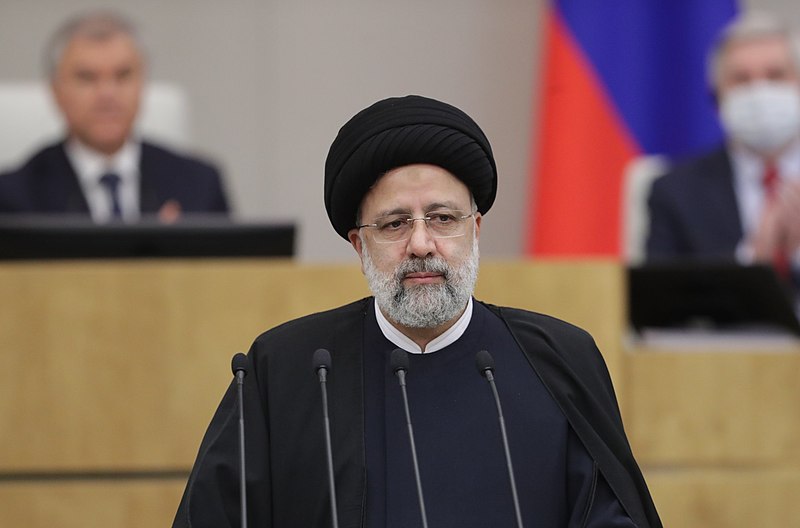
Iranian President Ebrahim Raisi said the country must take decisive action on the ongoing protests over the death of 22-year-old Mahsa Amini in the custody of Iran’s Morality Police. This also follows the escalated violence in the midst of the demonstrations, where dozens of people were killed.
According to Iranian state media, Raisi said Saturday that Iran must deal decisively “with those who oppose the country’s security and tranquillity.” Raisi’s remarks were during his conversation with the family of a member of the Basij volunteer force that was killed in the midst of the protests over Amini’s death in the custody of the Morality Police. The said member was taking part in the force’s crackdown on the protests in Mashhad.
Raisi apparently “stressed the necessity to distinguish between protest and disturbing public order and scrutiny” and called the ongoing events a “riot” instead. At least 41 people were killed from the ongoing unrest, according to state media, noting that the death toll was on its own count, and the official numbers have yet to be published.
Widespread protests have occurred in at least 31 provinces in Iran, having first broke out in northwestern Iran a week prior during Amini’s funeral. Amini fell into a coma after she was detained by the Morality Police, who were enforcing hijab rules on women.
Amini’s death sparked public outrage in the country, bringing to light issues of the restriction of women’s personal freedoms in Iran and its strict dress codes for women, among others.
Women played a major role in the ongoing protests, with some burning their veils in defiance while others publicly cut their hair as crowds called for the death of Iranian Supreme Leader Ali Khamenei. This year’s protests are also the largest in the country since the fuel protests of 2019.
Tehran has sought to accuse the United States of inciting the unrest, as the Iranian foreign ministry accused Washington of violating Iran’s sovereignty over the issue that is at the center of the demonstrations. Tehran also accused the US of further inciting the protesters in an effort to destabilize Iran.
The case has drawn international condemnation, and Iran’s foreign ministry also attacked some European leaders for exploiting Amini’s death to support the protesters while ignoring the others who support the system.