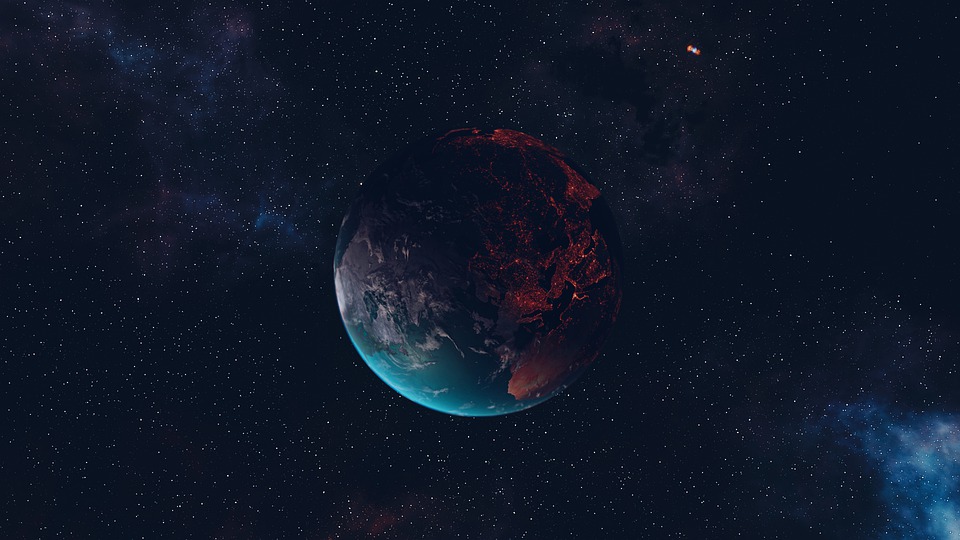
There are thousands of exoplanets all over space and beyond our own Solar System and scientists at NASA are on the hunt to find a planet that would share the same attributes as our own. Previously, the agency’s scientists may have come across an exoplanet in the sweet spot known as the habitable zone that resembles Earth.
In the program “NASA’s Unexplained Files” on the Science Channel, one particular exoplanet caught the attention of the agency’s scientists in 2015. Through the now-retired Kepler Space Telescope that was already four years into its run at the time, they found an exoplanet within the distant Cygnus starfield. The exoplanet, as they found through analysis of the data sent by Kepler, was found within the “Goldilocks zone” or the habitable zone of its host star. The exoplanet was also found to be similar in size to our own Earth.
“We have this new batch of data down from the spacecraft,” shared astrophysicist Jessie Christiansen. “We’re all analyzing the data and Tom Barclay runs around to everyone’s offices and says “Have you seen this planet? It’s the one, the one we’ve been looking for.” It’s Earth-sized and in the habitable zone of its star -- everybody was extremely excited.”
The exoplanet, which has then been referred to as Kepler-186f, would become the first example of an exoplanet that’s about Earth’s size and in a habitable zone. But despite the similarity the planet has with Earth, Dr. Christiansen said that the exoplanet is more like “Earth’s cousin” as it orbits a different kind of star. The star that Kepler-186f orbits is described as an M dwarf star which is redder and cooler. The light from the star, therefore, would make the bodies of water that may be present on the planet look orange, and that vegetation may thrive because of the amount of light.
Aside from exoplanets, scientists are also looking towards the elusive Planet Nine. NASA and ESA’s Hubble Space Telescope may have provided a breakthrough for scientists as it was able to observe a distant star system with an exoplanet orbiting very far from its host star. The planet is formally referred to as HD106906b and has around 11 times the mass of Jupiter. Since its discovery, astronomers have been observing this planet for years to study its movements and what it orbits.