


 Flavio Bolsonaro Leads Lula 49%-45% in Brazil Runoff Poll
  US Judge Blocks Trump Administration’s Taxpayer-Funded Political Ads
  Yandex Data Center Hit by Drone Strike as Russia-Ukraine Cyber Infrastructure Attacks Escalate
  Flydubai Co-Pilot Planned Suicide Attack on Israel Airport, UAE Says
  Trump Sanctions International Criminal Court, Sparking EU Backlash
  Djibouti Migrant Boat Capsizes, Killing 139 and Leaving 84 Missing
  Trump Announces Russia-Ukraine Energy Ceasefire Amid U.S. Pressure on Kyiv
  Pakistan Declares Emergency in Khyber Pakhtunkhwa, Suspends Imran Khan’s PTI Government
  Ripple Chairman Chris Larsen Donates $22.5 Million Ahead of US Midterms
  Mahmoud Abbas Postpones Palestinian Elections to September 2027
  US Charges Maduro and Wife With Torture Conspiracy
  Russian Strikes Kill Six in Ukraine, Including Three in Kharkiv
  Zelenskiy Slams US Over Deadly Russian Strikes on Ukraine
  UK Finance Minister Healey Calls for Fiscal Discipline Amid Global Risks
  JD Vance Questions Pentagon Plan to Livestream Fort Hood Shooter’s Execution
  Trump Announces Russia-Ukraine Energy Ceasefire as Zelenskiy Awaits Details
  RFK Jr. Launches Nationwide Vaccine Safety Review


 Add as a preferred source on Google
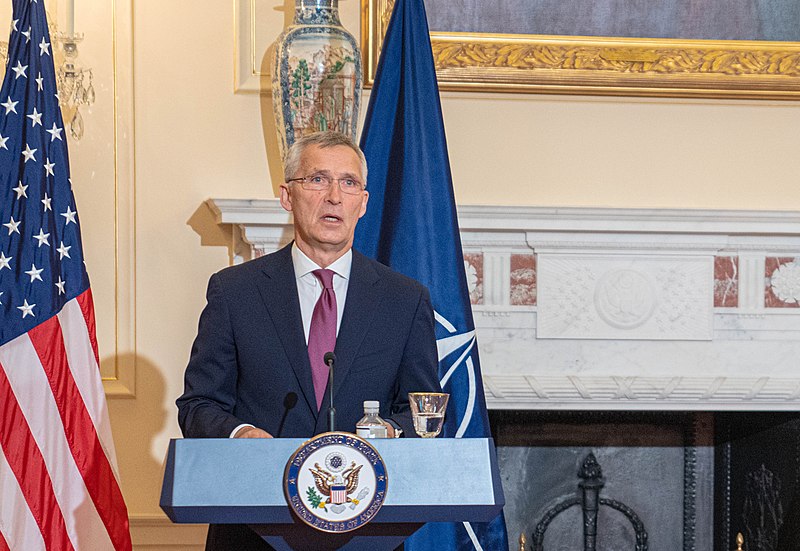
NATO Secretary-General Jens Stoltenberg said China should pose a security challenge for the alliance. Stoltenberg cited Beijing’s cooperation with Russia throughout the war and its comments against NATO expansion as reasons to designate China as such.
In an interview with Reuters on the sidelines of the UN General Assembly in New York, Stoltenberg said China poses a security threat to the alliance due to its relations with Russia and its comments against NATO’s expansion.
Stoltenberg also cited China’s rhetoric and “coercive behavior” in the South China Sea and its neighboring countries, including Beijing’s human rights abuses.
“The sum of it all just increases the importance of NATO allies standing together and realizing that China is part of the security challenges we need to face today and in the future,” said Stoltenberg.
Stoltenberg also condemned Vladimir Putin’s threat to the West about using nuclear weapons following Russia’s losses in Ukraine in recent weeks. The NATO chief said the 30-nation alliance will remain calm and not engage in the same “dangerous and reckless” rhetoric as the Russian leader.
“The only way to end this war is to prove that President Putin will not win on the battlefield. When he realizes that, he has to sit down and negotiate a reasonable agreement with Ukraine,” said Stoltenberg.
Stoltenberg said the order by Putin to partially mobilize reserve troops would only escalate the war and cost more lives. However, the NATO chief added that the order for a partial mobilization was an indication that Putin made a “big mistake” in invading Ukraine back in February.
The alliance on Thursday issued a statement condemning Russia’s plans to hold referendums in Russian-occupied territories of Ukraine while calling on its member countries to reject Moscow’s attempts of “territorial conquest.”
“Sham referenda in the Donetsk, Luhansk, Zaporizhzhia, and Kherson regions of Ukraine have no legitimacy and will be a blatant violation of the UN charter,” the alliance said in a statement, adding that NATO allies will not recognize the “illegal and illegitimate” annexation by Russia of Russian-occupied Ukrainian territories.
The referendums to join Russia by the occupied regions are set to take place from Friday to Tuesday next week.







