


 OPEC+ Keeps November Oil Output Targets Steady
  Fairshake Backs 32 Pro-Crypto House Candidates
  ISIS Attack Near Kirkuk Kills Iraqi Policeman After US Withdrawal
  Becton Dickinson to Invest $3 Billion in U.S. Medical Manufacturing
  Cuba Says US Contacts Continue but Formal Talks Remain Stalled
  Trump Gaza Peace Plan Stalls as Israel Retains Control
  California Woman Arrested Over Alleged Spying on Taiwan President’s Son
  US Army Tests Counter-Drone Technology Along Mexico Border
  Trump Offers US Help to Russia After Plague Lab Worker Dies
  Ukraine to Intensify Strikes on Russian Oil Refineries
  Takaichi Pledges to Control Japan Bond Issuance
  Trump Envoy Meets Sudan Army Chief in Egypt
  Trump Opens Tax-Exempt Dyed Diesel Access as Fuel Prices Surge
  Ethiopia-Tigray Fighting Intensifies as Airstrikes Kill 17
  New York Declares Measles Disaster Emergency as Cases Surge
  US Caribbean Vessel Strike Kills Four
  Yemen Launches Major Offensive to Retake Houthi-Held Areas


 Add as a preferred source on Google
The United States, Japan, and South Korea have all imposed sanctions on North Korea following its recent major intercontinental ballistic missile test. The new sanctions are part of the trilateral efforts to respond to Pyongyang’s increasingly growing missile tests this year.
The three countries imposed sanctions on several North Korean individuals that are linked to the isolated nation’s weapons programs following Pyongyang’s testing of its largest intercontinental ballistic missile last month. The sanctions are largely symbolic.
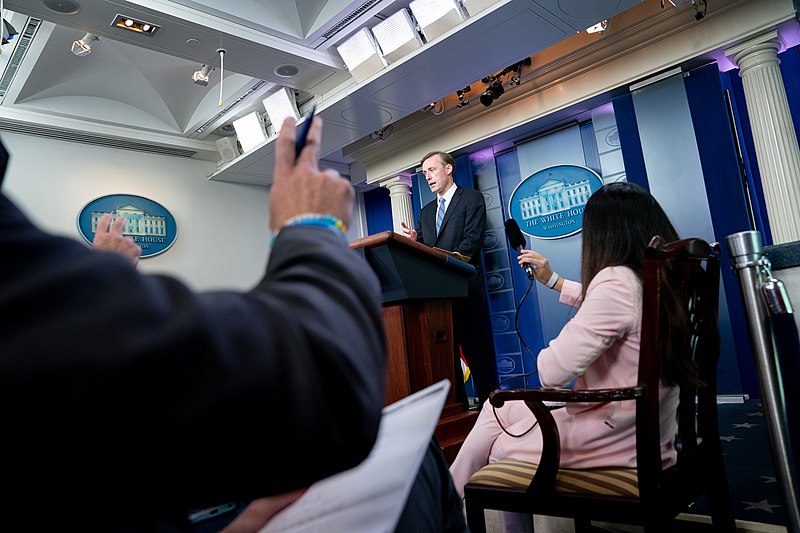
The implementation of sanctions came shortly after US National Security Adviser Jake Sullivan said that Washington was committed to using diplomacy and pressure to get North Korea to denuclearize.
Sullivan said the Biden administration had no illusions about the challenges but was committed to holding North Korea accountable. A spokesperson for the National Security Council said that the sanctions imposed so far have worked in “slowing down the development” of weapons programs and that North Korea has turned to “increasingly desperate” means of bringing in revenue, including virtual currency heists and other such cybercrimes to finance its weapons programs.
“The DPRK’s decision to continue ignoring our outreach is not in their best interest, or in the interest of the people of the DPRK,” said the spokesperson, referring to North Korea by the initials of its official name, the Democratic People’s Republic of Korea.
The US Treasury Department on Thursday unnamed the three North Korean officials; Jon Il-ho, Yu Jin, and Kim Su-gil. All three individuals were sanctioned by the European Union back in April. The South Korean foreign ministry also sanctioned seven other individuals, including a Singaporean and a Taiwanese, as well as eight entities. All those sanctioned by South Korea were already sanctioned by the US between January 2018 and October 2022.
The Japanese foreign ministry also designated sanctions on three entities and one individual. Among those sanctioned by Japan include the Lazarus Group for allegedly carrying out cyberattacks.
North Korean state media KCNA said Thursday that its ruling Workers Party is set to hold a plenary meeting of its central committee in late December, with the goal of setting new policy decisions on the agenda. The decision of the meeting was made at a gathering of the powerful politburo of the Worker’s Party Central Committee convened by Kim Jong-un.







