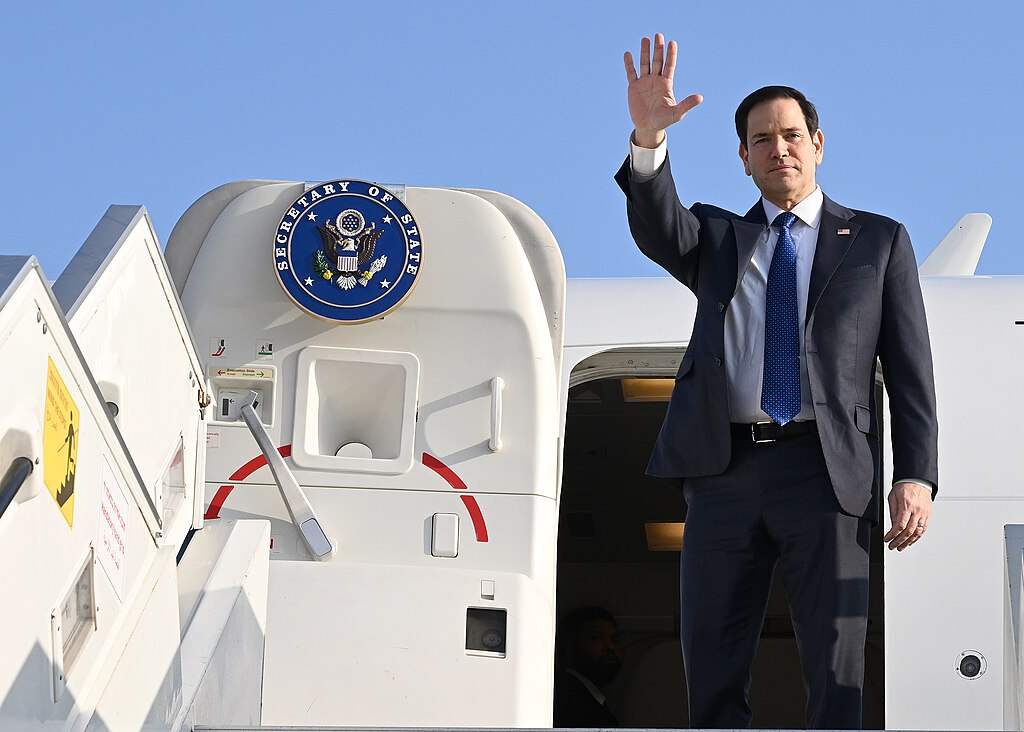
U.S. Secretary of State Marco Rubio met Chinese Foreign Minister Wang Yi in Kuala Lumpur on Friday, marking their first in-person meeting during heightened U.S.-China trade tensions. Rubio, attending the East Asia Summit and ASEAN Regional Forum, is on his first official Asia visit since taking office. The gathering includes top diplomats from Japan, South Korea, China, Russia, Australia, the EU, and Southeast Asia.
Their talks come amid U.S. President Donald Trump’s escalating tariffs targeting China and key Asian economies. Beijing recently warned against the reinstatement of U.S. levies next month and threatened retaliation toward countries aligning with Washington’s supply chain realignment strategy.
Rubio’s trip aims to reinforce U.S. commitment to the Indo-Pacific, yet tensions overshadow the visit following Washington’s announcement of sweeping new tariffs: 25% on Japan, South Korea, and Malaysia; 32% for Indonesia; 36% for Thailand and Cambodia; and 40% on Myanmar and Laos. China faces even higher proposed duties exceeding 100%, pending a resolution with the U.S. by August 12.
Wang condemned the U.S. tariffs as "unilateral bullying behavior," claiming they harm global trade and Southeast Asia’s development. In bilateral meetings, he emphasized regional resilience and urged ASEAN nations to resist economic pressure.
Rubio met with ministers from Thailand, Cambodia, Indonesia, Japan, and South Korea, pushing for enhanced regional cooperation and positioning the U.S. as a reliable strategic partner. According to the State Department, trilateral talks with Japan and South Korea focused on supply chain resilience, digital infrastructure, energy, and shipbuilding.
Rubio also addressed concerns over China’s support for Russia’s war in Ukraine, stating Beijing has backed Moscow “as much as it can without getting caught.”
The Philippines confirmed President Marcos Jr. will meet Trump in Washington this month, where tariffs will be a key topic.