


 Yen in Focus as BOJ, Fed Rate Hikes Reshape Currency Markets
  Australia Consumer Confidence Plunges as RBA Rate Hike Hits Households
  Zcash Privacy Demand Rises as AI Exposes Bitcoin Transactions
  Fed Unveils Stablecoin Rules Under GENIUS Act
  Bitmine to Stop Ethereum Buying After Reaching 5% ETH Supply
  Solana User Growth Jumps 33%, Outpacing Ethereum and Chainlink
  David Schwartz to Reveal XRP Ledger Future at Ripple Swell 2026
  Kazakhstan and Tether Explore Tenge Stablecoin and RWA Tokenization
  Kalshi Withdraws PEPE Perpetual Futures Filing
  RBI Raises Repo Rate to 5.50% in Hawkish Shift on Inflation Risks


 Add as a preferred source on Google
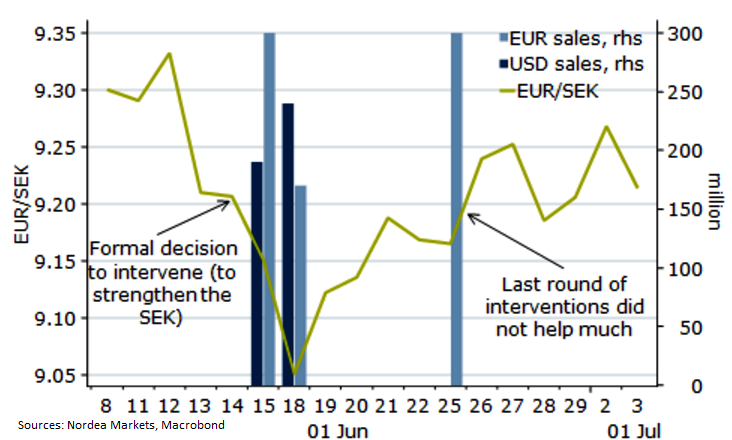
Riksbank's executive board on January 4th came up with the extraordinary move to allow its governor Mr Ingves and his first deputy governor, Kerstin af Jochnick to intervene in foreign exchange markets at any time. This is the latest attempt by the central bank in its determined campaign to try to rein in a soaring Swedish krona and boost inflation. Sweden's price growth has not exceeded the bank's 2 per cent target since 2011 raising concerns that the country could slip into deflation, threatening wages and dragging down the broader economy.
The Riksbank also said that "appreciations as a result of slowdowns in economies abroad (...) may need to be addressed using interventions". Taken at face value the Riksbank's announcement suggests it could sell the SEK even if EUR/SEK stays range-bound. Furthermore, should the Riksbank opt to intervene, market participants could speculate about the second-round effects on other currencies from potential diversification flows.
The move was decried by critics who argued that the bank had become too focused on the 2 percent target. Sweden's economic growth has been strong, with GDP expected to have expanded by about 3.7 per cent last year even though inflation has remained low. Market participants also argue that FX interventions often fail. While that may be the case, it surely depends on how the success criterion is formulated.
"Mr Ingves' new powers "truly sad" because currency interventions often fail to bring about the intended result. What it boils down to is that you will erode purchasing power. In the end, it's not beneficial to the country as a whole." said Andreas Wallstrom, economist at lender Nordea
The development of the trade-weighted krona will be crucial. If PBoC lets USD/CNY rise by 15%, this would on its own translate to a SEK gain of at least 1.2% in trade-weighted terms (without discussing spill-over effects on EM Asia, which would be substantial). EUR/SEK was trading at 9.2599 at 1143 GMT down around 0.10 % on the day.
"Currently our best guess is that a KIX level of around 107 would trigger action, but that level will change over time", notes Nordea Research.

- News

- Economy

- Central Banks
- Investing
- Research
- Roundups
- Digital Currency
- Insights
- Technical Analysis
- Technology
- Business
- Law
- Health
- Nature
- Fintech
- Science
- Topic
- Opinions
- ©Econometrics LLC . All Rights Reserved.
SEK 2016 - What could trigger Riksbank's action?
Tuesday, January 12, 2016 12:05 PM UTC
Editor's Picks



- Market Data
Most Popular




