


 Philippines Holds Historic Bangsamoro Election Amid Tight Security
  North Korea Holds Missile and Artillery Drill
  Judge Blocks Trump Rule Limiting Foreign Student Visas
  BRICS Calls for Restraint as Middle East War Escalates
  US Immigration Arrests Surge as Deportations Lag Behind
  Trump Rejects Calls for Tougher AI Regulation
  Trump Open to Chinese Automakers Building Cars in US
  Canada Seeks ‘Unique Alliance’ With EU, Carney Rules Out Membership
  Banking scandal rocks Brazil’s politics and the country’s presidential election in October
  Trump Touts $5,000 Checks if Republicans Win Congress
  Houthi Red Sea Gains Strengthen Iran’s Leverage Over Gulf States
  Russian Strikes Across Ukraine Kill Nine, Injure Dozens
  Ukraine Prepares for October Peace Talks With Russia and US
  China’s Global Times Slams Anthropic CEO’s AI Slowdown Plan as ‘Cold War’ Strategy
  Lula, Flavio Bolsonaro Deadlocked in Brazil Election Polls
  Sweden Election Puts Far Right and Centre Left in Tight Race
  Iran-Oman Talks Lay Groundwork for Hormuz Reopening


 Add as a preferred source on Google
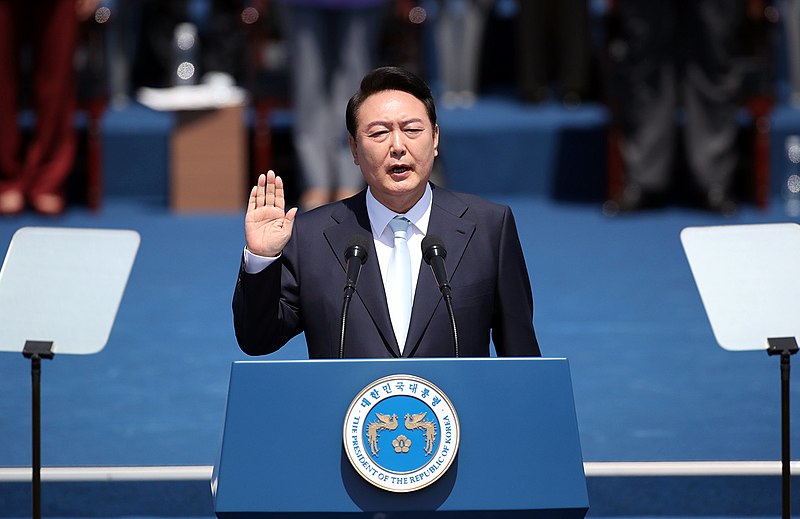
This week, South Korean President Yoon Suk-yeol was officially inaugurated as the country’s new leader. In his inauguration speech, Yoon suggested that he was ready to make an economic proposal with North Korea should Pyongyang decide to shut down its nuclear program.
According to Reuters, Yoon – who is expected to take a more hardline approach to North Korea – said in his inauguration speech that Pyongyang’s weapons program poses a threat to the peninsula. However, the conservative South Korean leader said he is ready to present an economic plan to North Korea if it denuclearizes.
“While North Korea’s nuclear programs are a threat to not only our security and that of Northeast Asia, the door to dialogue will also remain open so that we can peacefully resolve this threat,” said Yoon.
“If North Korea genuinely embarks on a process to complete denuclearization, we are prepared to work with the international community to present an audacious plan that will vastly strengthen North Korea’s economy and improve the quality of life for its people,” said Yoon.
While Yoon did not elaborate on the plan, his national security adviser Kim Sung-han told the outlet back in February that his team intends to devise a plan where Pyongyang could earn sanctions relief or economic aid in exchange for denuclearizing its military arsenal.
Yoon has signaled on taking a tougher stance on North Korea and has previously warned that a pre-emptive strike may be carried out if there is a possible attack. Yoon has previously pledged to strengthen South Korea’s deterrent capabilities.
Japanese foreign minister Yoshimasa Hayashi said Tuesday, following his meeting with Yoon, that Japan and South Korea have agreed to improve relations. Hayashi, who attended Yoon’s inauguration in Seoul, told reporters that Yoon wanted to be in close communication with Japan in order to mend relations between both countries.
“South Korea is an important country and cooperation…is indispensable for the stability of this region, including response to North Korea,” said Hayashi.
“We agreed that we should not leave the Japan-South Korea relations getting worse,” said Hayashi, noting the co-operation between the two countries and the trilateral cooperation of Japan-South Korea-US.







