


 Wells Fargo Expands Stablecoin Plans With 20 Major Banks
  Elon Musk Donates $366 Million to 2026 US Midterms
  Trezor Cuts Reseller Network After Ledger Security Breach
  Arm Breaches Qualcomm License Deal, Jury Awards $2
  OpenAI Uses AI to Uncover Hidden Recording Device, FBI Makes Arrest
  Visa Wins China Approval to Prepare Domestic Payments Expansion
  Samsung, SK Hynix Shares Plunge as China Chip Competition Grows
  CVS Pharmacy Agrees to $315 Million Opioid Settlement
  PepsiCo Slashes Poppi Earnout Valuation as Growth Slows
  Kalshi Seeks Sixth Circuit Review of Sports Betting Ruling
  Syndax Stock Drops 15% After Axatilimab Trial Failure
  Nvidia Invests in Four French AI Companies to Expand European Presence
  MNX Crypto Exchange Launches Futures for OpenAI, Anthropic Valuations
  Binance to Shut Down Crypto Mining Pool Services on November 10
  NEAR Protocol Leads AI Crypto Rally Amid Fed Rate Hike Fears
  Bank of America Hit With $1.2 Billion Fine Over Money Laundering Failures
  Tesla Holds $960 Million in Bitcoin as BTC Gains Top $710 Million


 Add as a preferred source on Google
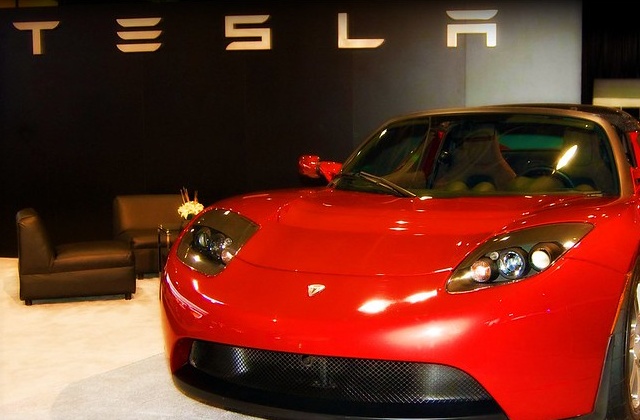
Tesla is the main reason why Elon Musk unseated Amazon owner Jeff Bezos as the world’s richest man in the world last month. The electric-car maker’s profits boosted Musk’s total net worth, and people can only assume that Tesla made millions for the sale of its EV cars.
But surprisingly, this is far from the truth. CNN Business reported that while Tesla is doing good amid the pandemic, the company’s 2020 net income did come from the car sales. The outlet revealed that carmakers actually earned more due to regulatory credits.
Tesla’s real source of profits
Based on the report, a total of 11 states in the U.S. require car manufacturing companies to sell a specific portion of zero-emissions vehicles by the year 2025. If the firms can’t do this, they have to purchase regulatory credits from another carmaker that meets the requirements set by the states.
One of the automakers that they can buy credits from is Tesla. Since many vehicle manufactories need the regulatory credits, Tesla just made a lucrative business out of selling the required credits.
In fact, it was said that Tesla was able to bring in around $3.3 billion in the last five years, and this was not from the EV cars sold, but more than half of this came from the sale of the regulatory credits.
Last year, Tesla received $1.6 billion from the regulatory credits alone, and this outdid the company’s net income of $721 million. This means that if not for the credits, Tesla would have suffered from a net loss in 2020.
"These guys are losing money selling cars,” Gordon Johnson of GLJ Research said. “They're making money selling credits and the credits are going away."
The 11 states that require cars to be zero-emission include California, New Jersey, Colorado, Connecticut, Maine, New York, Maryland, Massachusetts, Vermont, Oregon, and Rhode Island. Most of the car companies here purchased regulatory credits from Tesla.
Tesla’s growing competitors
Meanwhile, Tesla could really be at risk of earning less in the coming years as competitors in the electric vehicle trade are growing. More and more car builders have also started developing their own versions of EV cars, and quite a handful already released their models.
This is why the future of Tesla is not certain, even if it pioneered the electric car business. The entire industry is also moving to an all-electric future, and automakers are progressing rapidly. Thus, Tesla needs to innovate once again to keep up with new players in the EV trade.
"The competition is rendering Tesla's cars irrelevant," Johnson added. "We do not see this as a sustainable business model."







