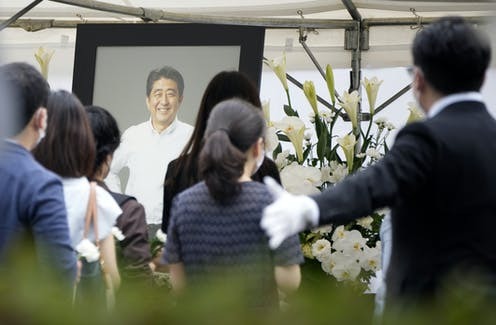
The man accused of assassinating former Japanese Prime Minister Shinzo Abe is set to face trial on Tuesday, marking nearly three years since the shocking killing that rattled Japan—a nation known for its low crime and rare instances of political violence. The case has drawn renewed global attention as it coincides with a summit between current Prime Minister Sanae Takaichi, a close ally of Abe, and visiting U.S. President Donald Trump.
Tetsuya Yamagami, 45, was arrested immediately after allegedly shooting Abe with a homemade firearm during a 2022 campaign speech in Nara, western Japan. According to reports, Yamagami held Abe responsible for promoting the Unification Church, a religious organization he blamed for his family’s financial ruin after his mother donated about 100 million yen ($663,000). The church, founded in South Korea in 1954, is widely known for its mass weddings and significant Japanese membership base, which provides much of its funding.
Prosecutors say Yamagami plans to admit to the killing but will contest certain charges related to Japan’s Firearms and Swords Control Act and Ordnance Manufacturing Act, according to officials at the Nara District Court. The trial’s first session begins at 2 p.m. local time (0500 GMT), with 17 additional hearings scheduled through the end of the year before a verdict expected on January 21.
Abe’s assassination led to widespread public anger after revelations that over 100 lawmakers in his Liberal Democratic Party had links to the Unification Church, causing a sharp decline in the party’s approval ratings. As the nation watches the trial unfold, it serves as a somber reminder of the event that reshaped Japan’s political landscape and reignited debate over the intersection of religion, politics, and security.